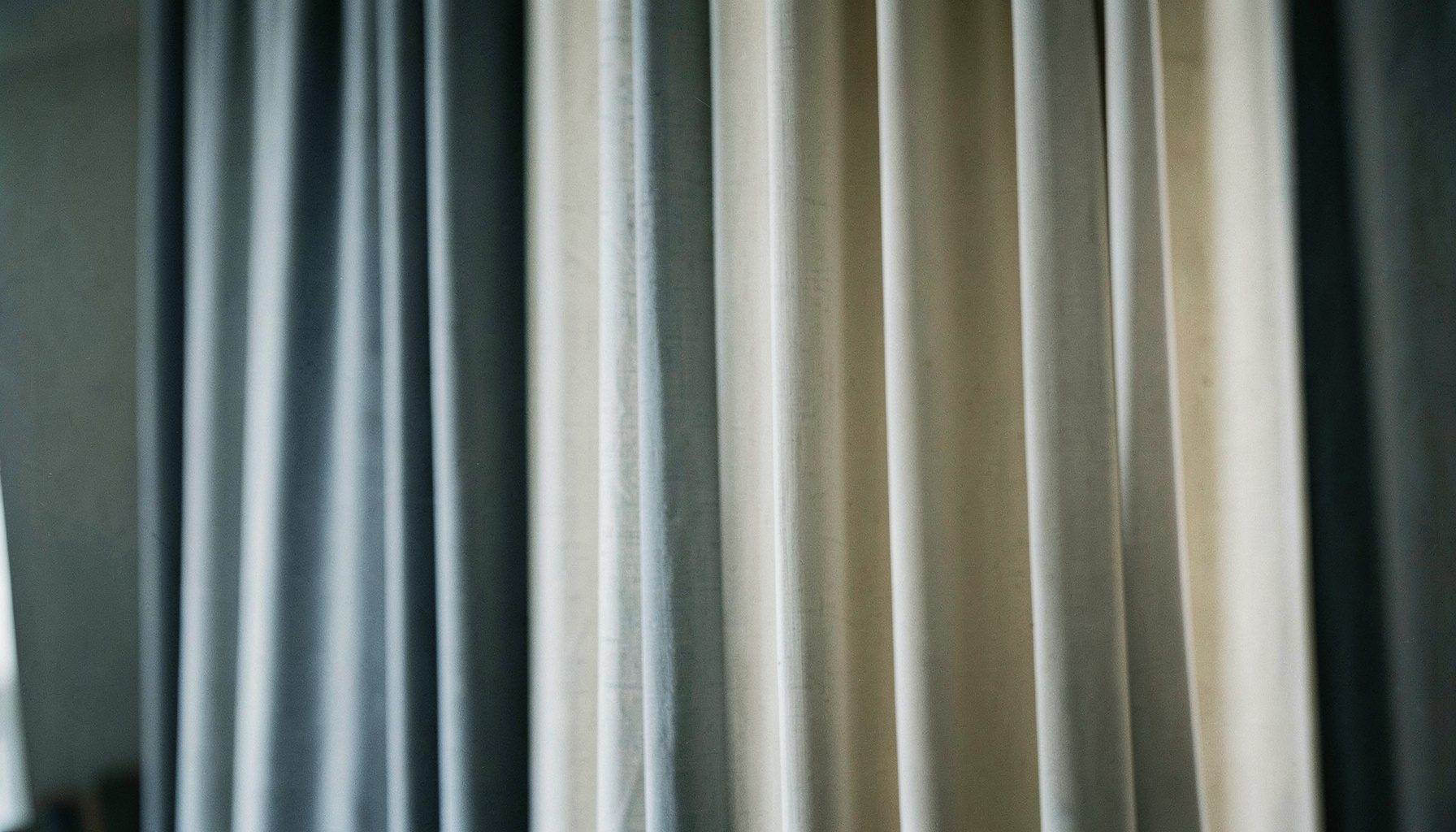
The benefits of a custom curtain lining with insulation
A curtain lining is the hidden layer between the decorative drape and the window. Made from insulating fabric, it slows heat transfer, helping a room feel cooler in summer and retain warmth in winter. It also separates visual design from performance, so the outer fabric can look light while the lining handles the practical work.
This separation is especially useful in Australia. West-facing rooms in Brisbane and Sydney collect harsh afternoon sun, while Canberra and Melbourne often need help keeping warmth inside on cold evenings. An insulated layer can make heating and air-conditioning work more efficiently without changing the window’s decorative style.
Reduce summer heat and winter heat loss
An insulated curtain creates an additional barrier against heat moving through glazing, particularly when the curtains are closed during the hottest part of the day. This can improve comfort in open-plan living areas and reduce the strain on reverse-cycle air conditioners.
The same barrier can help during winter. In a heated room, lined curtains slow the escape of warmth towards a cold window, which is valuable in Australian homes where heating may run before sunrise and after sunset. The result is usually a more consistent indoor temperature and potentially lower energy use.
Control light without losing the decorative finish
Insulation and blackout performance are related but not identical. An insulated lining is chosen mainly to slow heat transfer, whereas blackout fabric is designed to prevent visible light from passing through. A curtain can be specified for one function or, where its construction allows, for both.
This distinction matters in Australian homes with early morning sun, street lighting or reflected light from nearby buildings. A blackout lining is especially useful in bedrooms, media rooms and nurseries, while an insulated lining may be sufficient where privacy and temperature control matter more than complete darkness.
Match lining performance to the room
Start with the window’s orientation, then consider how the room is used. A north-facing room may benefit from retaining winter warmth, while a west-facing room needs both summer heat and glare control. Bedrooms need darkness, quiet studies may benefit from heavier fabric, and coastal properties often need help with drafts.
For visual planning, use room planning ideas to organise each window’s dimensions, floor clearance and nearby furniture before choosing a fabric or heading.
Common lining functions
- Insulated fabric adds a thermal barrier without necessarily blocking all daylight.
- Blackout fabric controls light and glare for sleeping or screen viewing.
- A combined insulated blackout lining serves rooms needing temperature and darkness control.
Details to confirm before ordering
- The direction the window faces and when it receives direct sunlight.
- Whether the room is mainly cooled or heated throughout the day.
- The required curtain length, track width and surrounding furniture.
Factory Direct Drapes offers insulated and blackout options in custom draperies manufactured in America. Its virtual room designer can also help customers compare curtain scale, colour and decorative finishes before ordering.
Plan the fit around the window
A custom lining is only as effective as the finished panel. It must meet the floor or stop at the chosen length, overlap correctly around the window and close without leaving an unwanted gap. Accurate measurements also help the curtain hang evenly and make daily opening and closing easier.
The heading should suit the window and the way the room operates. A simple rod-pocket curtain creates a relaxed profile, while a tracked or pleated style suits larger windows and precise stacking. The pocket, track, finials and curtain return should all be considered as one system.
Add comfort while protecting the decorative fabric
The final appearance depends on how the fabric is gathered, so compare types of curtain pleats before selecting a heading. Fullness, heading width and panel dimensions work together, and changing one without considering the others can affect how evenly the lining hangs.
Beyond temperature, a properly lined drape can reduce minor air movement and improve privacy. Heavy curtains and substantial linings may soften everyday household noise, although they cannot replace acoustic glass or specialist sound treatment. The lining also forms a protective barrier against dust and helps shield the decorative fabric from fading.
Australian shoppers can compare standard curtains at Bunnings, IKEA and Harvey Norman, while factory-direct online retailers add made-to-measure options. Custom sizing is particularly valuable for older Australian homes with deep reveals, high ceilings or windows that standard sizes cannot accommodate. The National Construction Code also sets energy-efficiency provisions for new buildings, with relevant state requirements adding further detail; well-chosen curtains can complement, rather than replace, compliant glazing and external shading.
Sample fabrics and order with confidence
Begin with fabric samples and place each window in the room before measuring. Check the curtain rod or track, desired floor clearance, possible obstructions and how much space remains for stacking. Factory Direct Drapes provides measuring guidance and installation resources to support this process, and its lifetime workmanship warranty adds confidence to a made-to-measure investment.
Choose a decorative face and insulated lining that suit the room’s orientation, light exposure and daily use. Request your fabric samples today, then use the measuring guidance to create a made-to-measure curtain plan for every window.