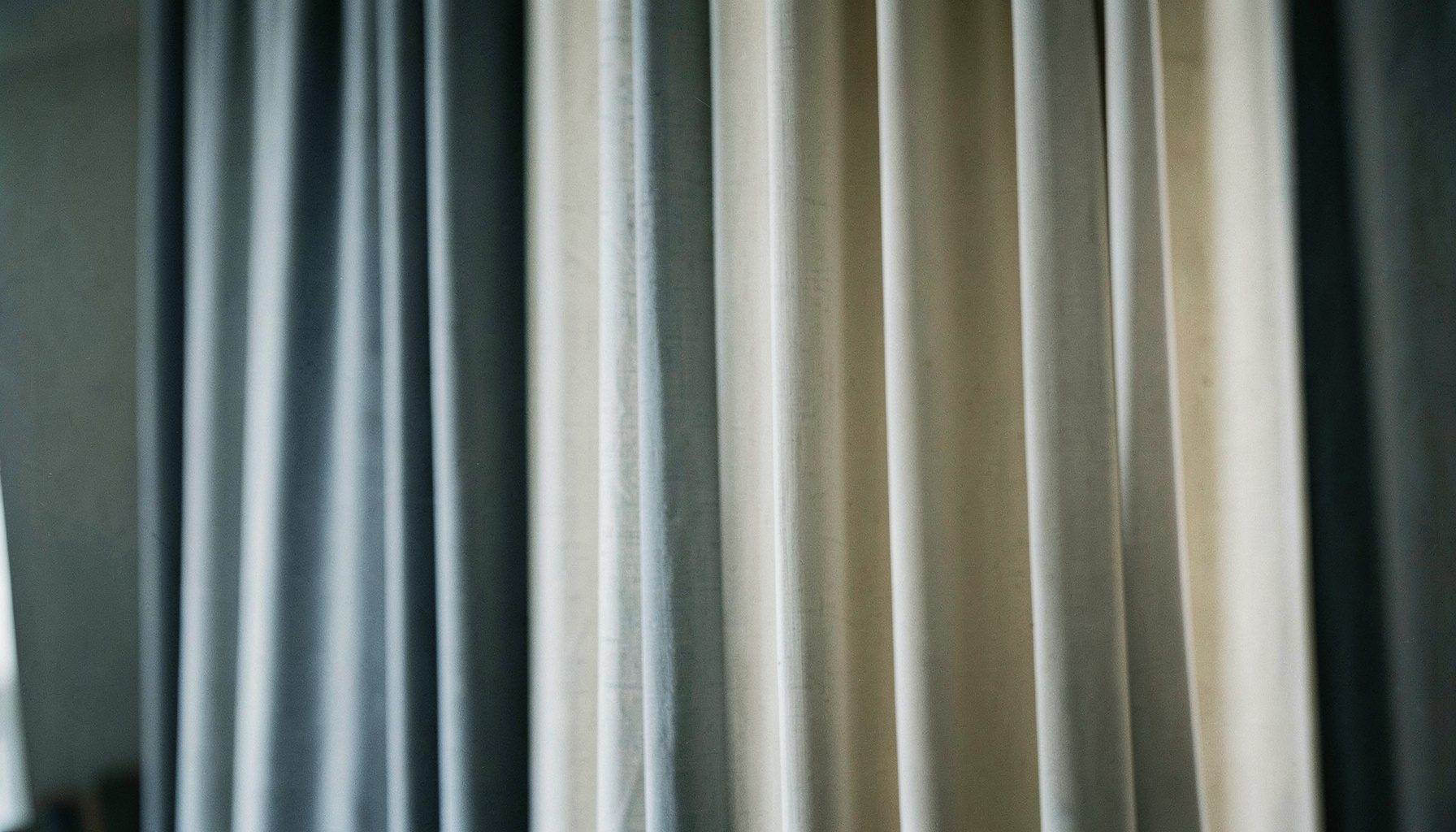
Pairing curtains and Roman shades for Australian homes
Roman shades and curtains can look like competing choices, yet they often work best as a team. A shade gives a window a neat, tailored profile, while curtains add softness, height and adjustable daylight. Used together, they can make one wall feel composed rather than overworked.
Matching the two is less about using identical fabric and more about repeating colour, texture and scale. Australian homes, with generous glazing, a practical need for summer shade and views to the backyard, make that coordination especially valuable.
Plan where each window treatment belongs
A Roman shade works particularly well as a clean focal point on a single window, while curtains frame a wider opening or soften a wall of glass. Trying to fit both onto the same narrow window can crowd the reveal; a coordinated pair is often easier to read.
Think about function before fabric. Use the shade where glare, privacy or heat needs a neat solution, and curtains where a room benefits from generous height, adjustable daylight and a softer silhouette. In Australian homes, large lounge-room windows and sliding doors often make that division useful.
Before buying, sketch the window, wall and nearby furniture at a smaller scale. Decide whether the Roman shade should sit inside the recess, just outside it or below the pelmet, because that choice affects the curtain rod position and how much light leaks around the edges.
Coordinate colour, pattern and texture
Colour is the easiest connection, but repeating one exact fabric is not essential. Pull a shared tone from the Roman shade and use it in the curtains, or choose a quieter curtain colour that lets the patterned shade lead. Repeat a second colour from the print elsewhere in the room to create a deliberate rhythm.
Texture does much of the coordinating. A crisp cotton or linen blend suits the flat folds of a Roman shade, while a fluid curtain fabric gives the same palette movement. For the drape itself, handmade drapery benefits explain how careful construction can give curtains a cleaner finish and a more deliberate silhouette.
Check fabric samples on the actual window at different times. A colour that looks right under showroom lighting can turn green beside a lawn or pick up the warm cast of brickwork. The aim is coordination, not a matching outfit: you should still spot the difference between crisp geometry and softer folds.
Plan for light, heat and privacy
Summer is the big test, especially for west-facing rooms in Sydney and Melbourne. A lined or blackout Roman shade can reduce glare and heat gain, while curtains add another layer when drawn across. UV-stable fabric helps protect furnishings from fading in strong Australian sunlight.
For privacy, think in layers rather than all-or-nothing. A sheer Roman shade can soften a view while an underlay supplies darkness; curtains can then remain open during the day and close at night. Test the room at the hours you actually use it, including early light in a bedroom and evening light near a street-facing window.
For hardware in humid homes, powder-coated aluminium or marine-grade stainless steel is a sensible choice. Keep material choices in perspective: this guide to zinc and testosterone support concerns the mineral’s role in men’s health, rather than the fibres, linings or finishes used at your windows.
Check the details before ordering
For curtains, the heading sets the character: pinch pleat details explain how a tailored heading can echo the orderly folds of a Roman shade while adding a softer finish. A relaxed rod pocket or wave heading suits a more casual room; crisp pleats suit a sharper, tailored one.
Measure in centimetres, not inches, and note the frame, recess, floor line and ceiling height. Many newer Australian homes have ceilings around 2.7 metres, but older properties can differ, so use the actual measurement rather than a standard. For made-to-measure curtains, check whether the measurements refer to the fabric or the finished panel.
A quick room-based comparison helps prevent a mismatch:
- Pair a patterned Roman shade with plain curtains, or repeat its main colour in a complementary curtain fabric.
- Choose blackout or insulated options where heat, glare or privacy matter, rather than relying on one treatment for every window.
- Check heading styles, rod finishes, lining and fabric weight together; the overall silhouette should feel balanced from across the room.
- Allow extra fabric for gathered curtains and verify finished dimensions, mounting points and floor clearance.
Bring the room together
Factory Direct Drapes makes its draperies in America, so Australian shoppers should confirm current freight, customs treatment and delivery estimates for a made-to-measure order before paying. Checking the actual window against the maker’s measuring guidance helps prevent an expensive mismatch.
Order fabric samples, explore the virtual room designer and create your coordinated Roman shade and curtain treatment direct from Factory Direct Drapes. The handmade-in-America craftsmanship comes with a lifetime workmanship warranty.