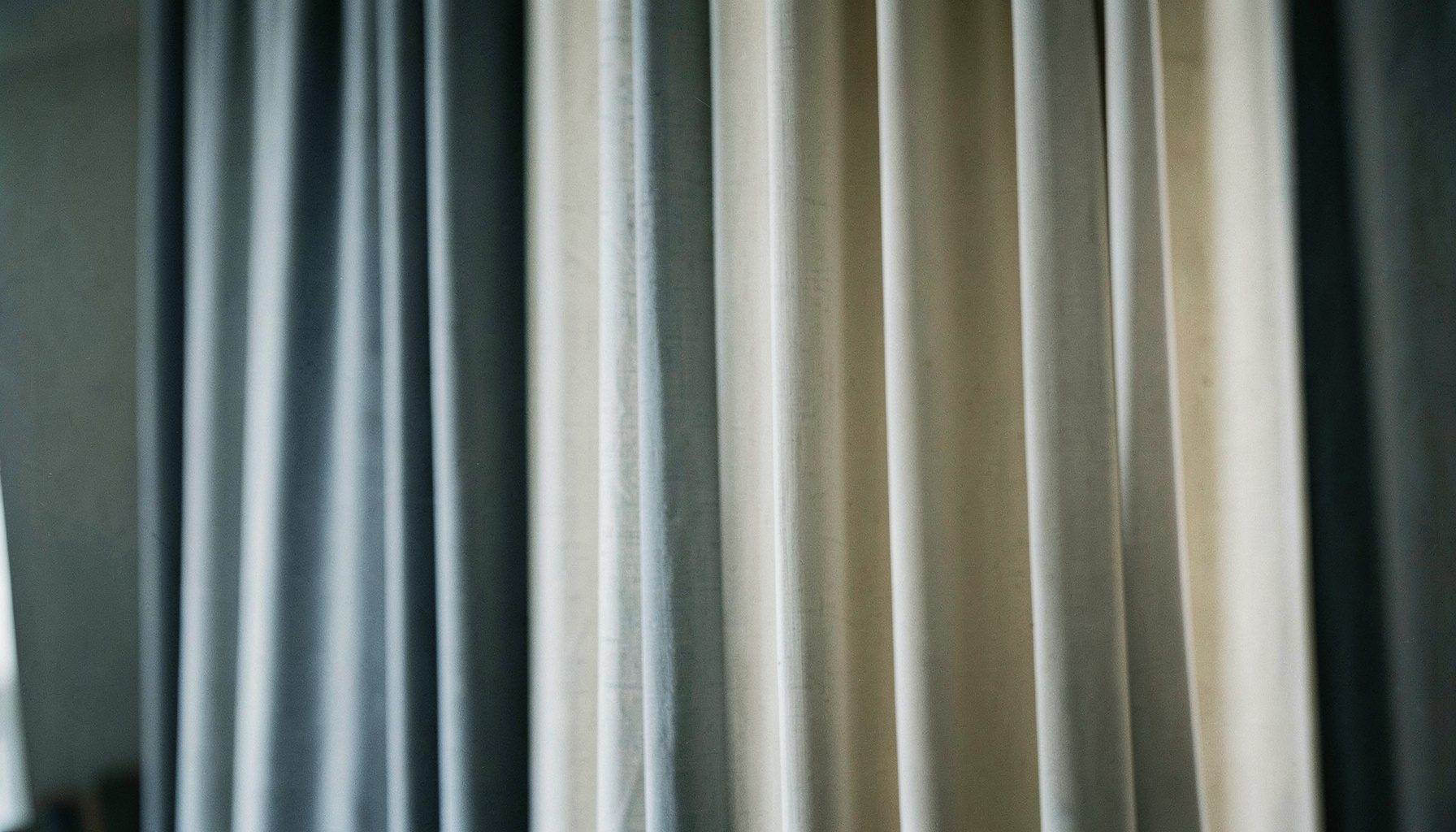
How to layer sheer curtains with heavy drapes for a luxe look
A luxe layered window works because light, texture and depth change together. The sheer softens the view and filters daylight, while the heavier drape supplies weight, colour and control over brightness. Related colours with distinct materials create richness without clutter.
In Australia, this approach suits homes where living areas open to decks through wide sliding doors and rooms experience strong sun, humid summers or cool evenings. Two adjustable layers admit light and airflow when wanted, then close the room visually and thermally as conditions change.
Plan the role of each layer
Begin by defining what each layer should achieve. Use sheers for diffused daylight, daytime privacy and a light visual finish. Use drapes to frame the opening, absorb sound, reduce glare and create a stronger evening silhouette. This prevents both fabrics from competing for the same job.
For most windows, place the sheer on the track nearest the glass and the drapes on the outer track. The reverse can suit a very dark room or an unusual blackout requirement, but test sightlines first. A wide outer track lets heavy panels stack clear of the sheer so both can open fully.
Measure for full, even coverage
Measure the opening rather than estimating from the floor. Record the width at the top, middle and bottom, the drop from the chosen track, and any obstructions such as radiators, handles or ceiling lights. Sliding doors in modern Australian apartments and terrace homes in Sydney or Melbourne may need two tracks rather than one crowded rod.
Allow enough fullness for the drape to gather into folds without making the stack difficult to pull back. Roughly twice the flat curtain width is a useful starting point, but weight, heading and track depth affect the result. Draw the window to scale, including stack-back space, before ordering.
Choose sheers for softness and privacy
Sheers can look crisp or soft depending on weave and weight. Plain voile gives a clean veil, while a fine linen-look or textured weave adds depth without visual weight. Warm white and oatmeal suit natural interiors; pale taupe works with timber and stone. Avoid stark contrast if the goal is a calm, hotel-style atmosphere.
Check opacity in actual room light, not only in a sample photograph. Hold the fabric against the window at midday and toward evening. If neighbours can see silhouettes, consider a denser sheer or a lined lower edge. For west-facing rooms in Perth or Adelaide, UV-filtering fabric can reduce fading while preserving brightness.
Give the drapes enough visual weight
Heavy drapes need not feel stiff or oversized. A substantial linen blend, cotton canvas or velvet creates a tailored drape, while a softer weave gives a relaxed look. Match weight to the window: large glazing needs panels with enough body for straight folds, whereas a narrow casement can carry lighter fabric.
Think about how fabric behaves in Australian conditions. Breathable cotton and linen blends stay comfortable in air-conditioned rooms, while velvet can feel warm unless the room is well ventilated. Dark cloth absorbs more heat, so lining may improve comfort and light control. Request a sample and care guidance before choosing a difficult-to-clean textile.
Install the tracks for a polished finish
Tracks and rods determine whether expensive fabric looks polished. A ceiling-mounted track can lengthen the window and suit the open-plan layouts common in new Australian homes; a slim wall-mounted rod may suit a low ceiling or bulkhead. Decorative rods add detail, but their brackets must support fully gathered fabric.
Check the installation surface before drilling. Plasterboard, masonry and timber framing need suitable fixings, and the track must be level. Secure loose cords or chains away from children, especially where a sliding door opens onto a busy family room. Leave access for cleaning the track, fabric and floor beneath the panels.
Tune the layers for Australian conditions
Australian climate makes layering unusually useful. Brisbane homes often need airflow and shade on humid days, while Melbourne and Adelaide can move from bright afternoons to chilly evenings. Perth’s strong western light makes glare and fading serious concerns. Choose lining and insulation for the window’s orientation, then use the sheer alone when softer light is enough.
Care affects the drape. Vacuum gently from the top, rotate panels periodically and avoid vigorous brushing on textured fibres. Follow the maker’s cleaning instructions. For silk or linen, use the specific silk and linen care guidance rather than assuming every natural fabric can be washed or steam-cleaned in the same way.
Coordinate the room and check the details
Style the layers as one scheme, but give the outer drape enough contrast to lead the eye. Repeat one sheer colour in cushions or a rug, and let the hardware finish the room rather than adding competing metallic tones. Full-length panels make low windows appear taller, while stopping just above a bulky radiator can avoid trapped heat and awkward pooling.
Before paying, check measurements, delivery terms, returns and warranty. The Australian Consumer Law provides consumer guarantees for goods, including acceptable quality and fitness for a disclosed purpose, so read the product description carefully. Overseas online purchases may involve currency conversion, import charges and longer delivery times.
Careful checking also matters when an online purchase involves a health product. Verify prescription treatment information against current regulatory guidance and discuss suitability with a registered pharmacist or prescriber. Retail claims should not replace professional advice, just as a curtain photograph should not replace measuring the actual opening.
Ready to create a layered window? Explore the custom drapery collection, compare styles and request fabric samples, then use the virtual room designer, measuring guidance and installation resources to plan the job. The collection is handmade in America, sold directly and backed by a lifetime workmanship warranty. Check current shipping, duties and returns for your Australian address before ordering.