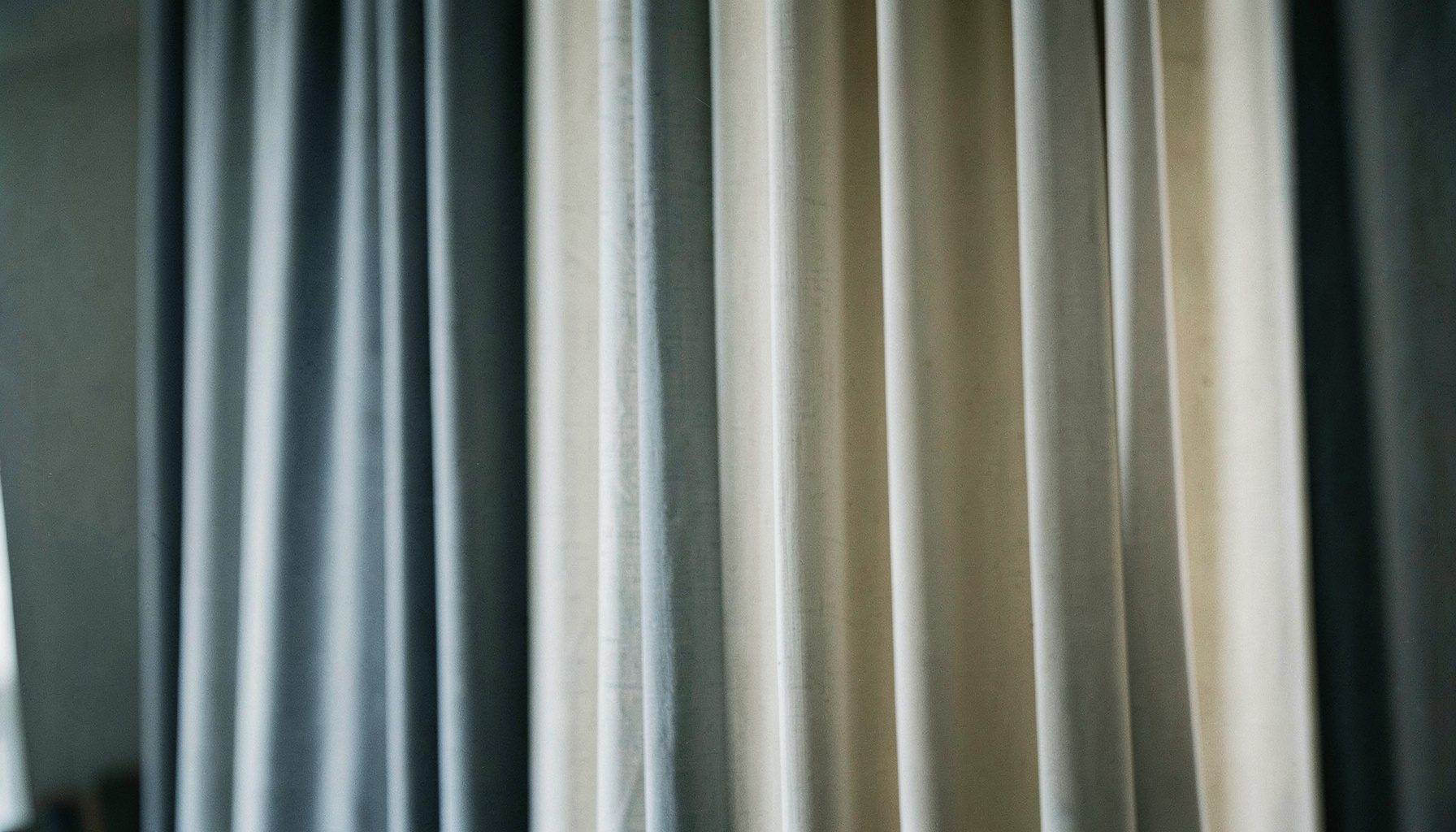
How to care for silk and linen curtain fabrics
Silk and linen curtains bring elegant texture and natural light control, but their fibres react differently to water, heat and sunlight. Gentle handling, timely cleaning and the right drying conditions help preserve colour, drape and strength for many years.
Australian conditions make those details especially important. Humid summers in Sydney and Melbourne encourage mildew, strong Brisbane sun can fade fibres, and Canberra’s dry winters can leave dusty folds near indoor heaters. Follow the maker’s label before using any water or cleaner.
Start with the care label
A sewn-in label is the most reliable guide because custom draperies may combine silk or linen faces with different linings, interfacings and finishes. “Dry clean only” takes priority over general advice, while washable linen may still need cold water and low heat.
Check every panel if labels differ, and record the method before cleaning. If you are updating a relaxed country-style interior, rustic decorating ideas offers colour and texture inspiration that can complement natural linen without changing its care needs.
Control sunlight, moisture and dust
Many Australian homes feature broad windows, sliding doors and shaded outdoor areas, so panels may receive intense light while also holding coastal humidity. Rotate curtains periodically, keep them away from hot glass and avoid damp folds; UV exposure can weaken silk yarns and fade linen.
Ventilate the room without directing strong outdoor airflow at the panels. In humid weather, run a dehumidifier or air-conditioner dry mode where practical and maintain airflow around the rod. In cooler homes, position silk away from heaters and air-conditioner outlets; direct heat can shrink linen or dull silk, while cold vents can encourage condensation.
Vacuum and spot-clean with care
Dust settles in folds and headings, where it can abrade fibres and reduce the smooth fall of the fabric. Vacuum weekly or fortnightly with a soft upholstery brush, low suction and no beater bar. Support delicate panels with one hand and avoid catching embellishments or fringing.
For an isolated mark, check the label and test an unseen area. Use a small amount of mild, pH-neutral detergent, gently blot with a clean white cloth and rinse by blotting with distilled water to limit mineral rings. Avoid bleach, enzymes and aerosol sprays; seek a cleaner experienced with silk drapery.
Wash removable panels correctly
Only wash a panel when its label explicitly allows it. Remove hooks and hardware, place the fabric loosely in a mesh laundry bag if recommended, and use a cold gentle cycle with mild detergent and a low spin. Separate dark, bright and delicate colours, and never wring linen.
Humid days and compact apartments can make indoor drying difficult. Reshape each panel, dry it in shade with gentle airflow and keep it away from direct sun and strong wind. Skip tumble drying unless the maker permits it; heat may shrink linen, distort silk and damage special finishes.
Maintain hardware, linings and shape
Dust decorative rods with a dry microfibre cloth, check brackets for looseness and clear the track without pulling on the heading. A guide to factory-direct buying explains why construction details, swatches and support are worth comparing, particularly when a rod must carry lined or gathered panels safely.
Protect or replace linings before they tear, and rehang panels promptly to prevent set creases. Steam only if the care label allows it: silk can watermark, so keep the steamer distant and test first. Many creases in linen are best managed by hanging and smoothing rather than repeated washing.
Build a dependable care routine
Short, regular attention prevents small issues from becoming permanent damage. Use these checklists for Australian homes and busy households.
Weekly and monthly care
- Vacuum folds, headings and the floor beneath each panel.
- Check rods, tracks and brackets for dust or looseness.
- Rotate panels away from intense afternoon sunlight.
- Treat new marks promptly after testing the cleaner.
Seasonal care
- Ventilate the room on a mild, dry day away from strong wind.
- Inspect seams, linings and hems for fraying or stains.
- Rehang panels and gently reshape softened folds.
- Recheck the label before washing, steaming or spot-cleaning.
At the end of each season, look for fading, water marks or changes in drape, then adjust placement or arrange professional cleaning if needed.
Protect your curtains for years
Before replacing panels, compare repair with renewal and review this guide to custom drapery costs when weighing locally commissioned drapery against imported ready-made or factory-direct choices. Under the Australian Consumer Law, fabric, care and warranty claims must not mislead. For hotels, schools and healthcare projects, fire-performance evidence may also be required under the National Construction Code.
Factory Direct Drapes makes custom draperies, valances and decorative curtain rods by hand in America and sells them directly. Request fabric samples, use the measuring guidance or virtual room designer, and select insulated, blackout or light-filtering options suited to Australian conditions. Backed by a lifetime workmanship warranty, you can order your swatches, confirm the measurements and create a lasting curtain scheme.