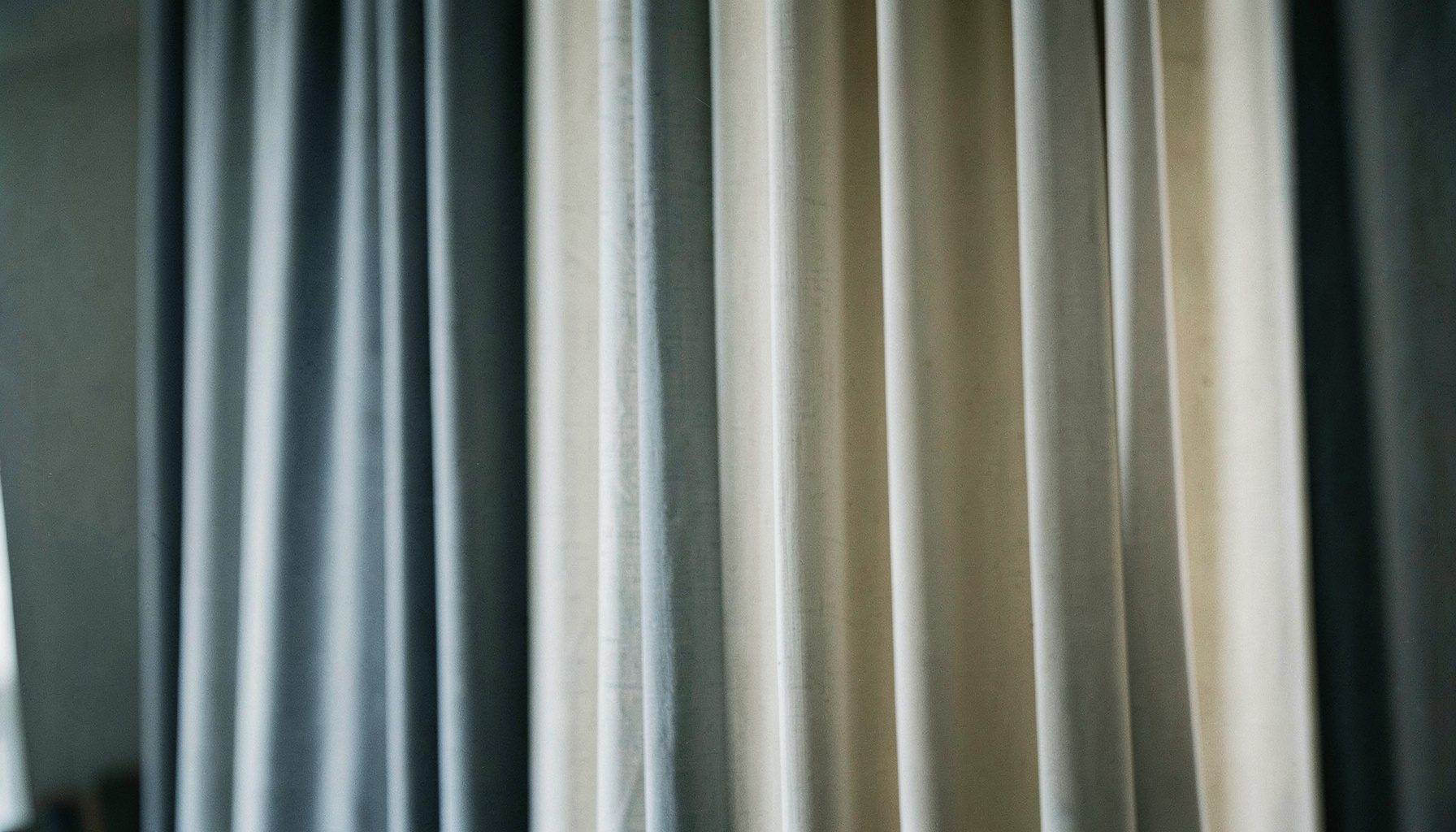
How to choose the right curtain width for a full look
Choosing the right curtain width for a full look starts with understanding how finished panels will sit, gather and cover the frame. Width affects light control, privacy and overall room proportion. A wider curtain is not simply a larger order: the rod or track, heading style and fabric fullness combine to create the look.
Start by separating three measurements: window width, available track or rod span, and total curtain-fabric width. Confusing these figures is common, especially when a pair contains two finished panels. Decide whether the curtains will sit inside the reveal or outside the window before choosing a heading.
Australian homes are generally measured in centimetres, so record window and track widths in centimetres and drops in millimetres. Standard sizes may suit ordinary rooms, but arches, sliding doors, bay windows and unusual openings need an individual check. Accurate measurements also prevent changes after fabrication.
Custom draperies make these distinctions easier because width, drop and heading can be specified for the room. As a manufacturer selling direct online, Factory Direct Drapes offers measuring guidance, fabric samples, installation resources and a lifetime workmanship warranty.
Measure the window and mounting area
For an inside mount, measure the reveal at its narrowest point and check for brackets, screws or obstacles. For an outside mount, measure across the frame and allow space for the rod, finials and stacking. A wider outside-mounted track can disguise uneven trim and create a fuller silhouette.
Measure the finished drop from beneath the heading to the hem’s final position. Check the floor, skirting and furniture that may restrict movement. For tracks turning a corner, mark the full route rather than estimating from the straight window width.
Calculate fullness for balanced folds
Fullness is the relationship between flat fabric and the space it covers. A ratio of about 1.5:1 creates a relaxed finish; 2:1 gives a balanced, fuller appearance; and 2.5:1 suits generous folds. Sheers usually need extra fabric because transparency softens the folds.
Use the window or covered frame as the visual starting point. A 120-centimetre window often calls for roughly 180 to 240 centimetres of total curtain fabric. Check the mounting width first: if the track is only as long as the window, a wider track may be needed to gather that fabric neatly.
For a pair, establish whether the quoted size is combined fabric width or each panel. The overlap should close the centre without bunching. Single panels can suit compact tracks, although they leave the opposite side exposed.
Match the heading and decorative rod
The heading affects fullness and the stack of fabric. Pinch pleats, ripple folds, tabs and grommets create different shapes, and some consume more panel width than others. When comparing systems, this grommet curtain guide explains grommet proportions and where they work best.
Give a custom decorative rod enough width for the heading’s stack and desired overlap. Finials need clearance, while the rod should extend beyond the frame to make the window appear larger. Confirm its load rating and bracket spacing before ordering oversized draperies.
Check returns, overlap and hardware
Allow a return of roughly 5 to 10 centimetres at each outside edge to conceal rod ends, then add enough central overlap for privacy. If the curtains stay open most of the time, prioritise neat stacking; if they close daily, prioritise coverage and easy movement.
Check every fastener. Plasterboard, masonry, metal tracks and unusual reveals may need different fixings, while old brickwork can conceal pipes or cables. Keep hardware clear of heating and air-conditioning outlets so airflow is not obstructed.
The hem should suit the flooring and household. In Australia, the curtain “drop” may end just above a tiled floor, touch the surface for a tailored look, or sit above a balcony door to avoid catching.
Match fabric to light control
Blackout and insulated curtains need enough width to close without gaps, but their weight calls for a sturdy track and suitable carriers. Lined drapes soften glare and reduce heat loss, while lighter fabrics suit sheer layers. Choose opacity for the room rather than relying on width alone.
A fabric sample reveals texture, colour and weight in changing light. Hold it near the window during the brightest part of the day and again in the evening. This matters in a home office or bedroom, where attractive fabric may still disappoint if it leaves a visible glow.
Plan for Australian rooms and conditions
Sun orientation matters in the Southern Hemisphere. North-facing rooms in Sydney can receive intense direct sun, while west-facing spaces in Melbourne often heat up late in the day. A wide lined curtain with a blackout or insulating option can improve comfort beside large glazing.
Brisbane’s stronger sun and humidity call for stable, colourfast fabrics and a heading that does not trap moisture. Test dark colours beside the window, as they can absorb heat and make tropical rooms warmer. In cooler southern cities, lined curtains can also reduce draughts through older terrace windows.
Australian floor plans range from compact apartments to open-plan houses, so mounting position may matter more than a window’s raw width. Aussies also call a short decorative valance a “pelmet”. When coordinating the wider room, building and renovation ideas can help compare proportions, finishes and layouts before draperies are made.
Order custom draperies with confidence
Use the measuring guide to record the track or rod span, finished drop, panel count, heading, overlap and returns. Ask customer support to check unusual windows, and request fabric samples before committing to a colour or lining. The virtual room designer can test scale before an order is finalised.
When ready, order Factory Direct Drapes’ custom curtains, draperies, valances or decorative rods directly. The products are handmade in America and backed by a lifetime workmanship warranty, giving you a clear path from planning to a polished, full-looking result.