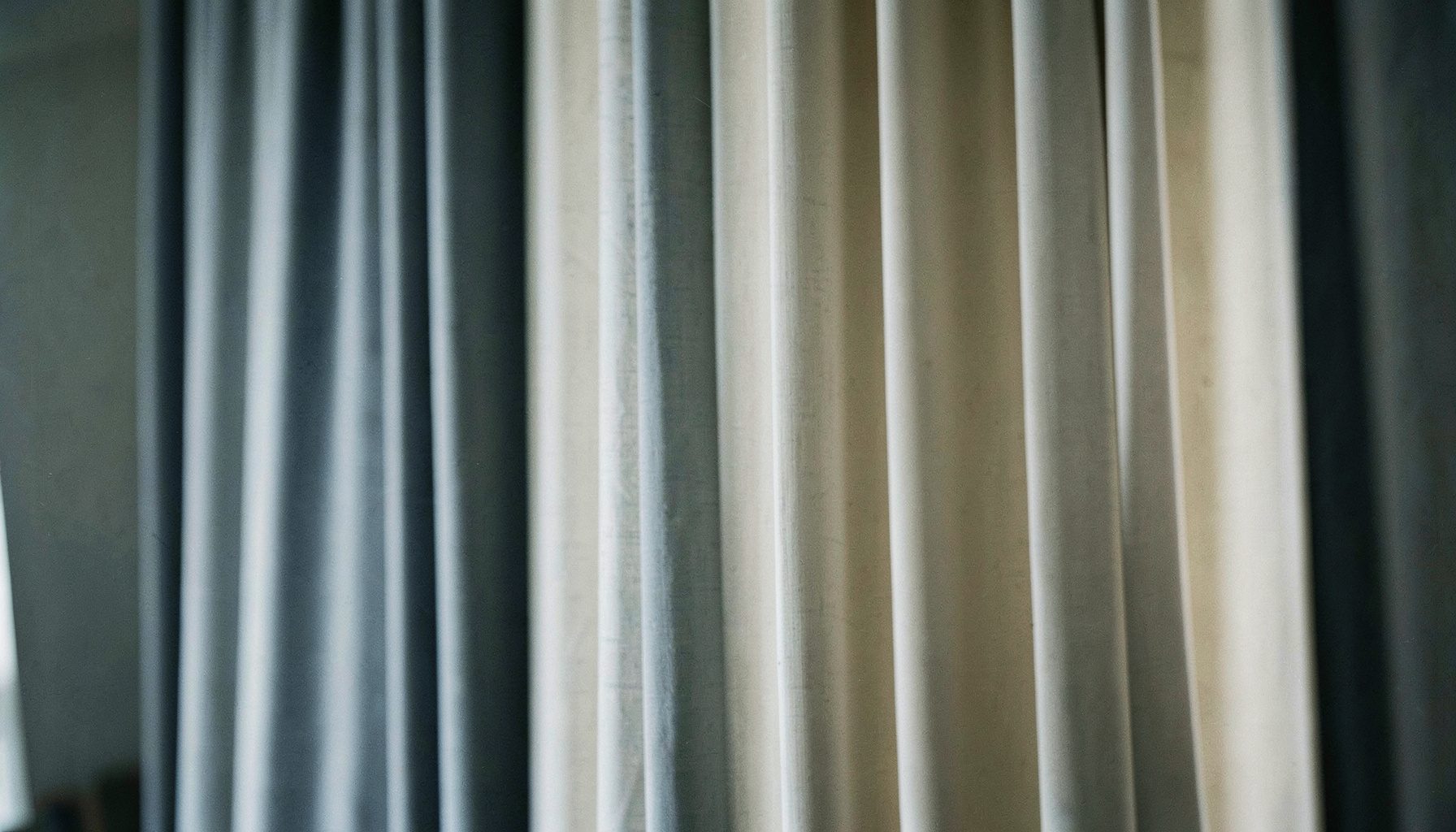
Grommet curtains explained: styles, function, and where they shine
Grommet curtains—often called eyelet curtains—are a drapery style where metal rings are fitted into the top of each panel, letting the fabric thread directly onto a pole. The rings replace hooks and pleats, so the header gathers into uniform folds. For homeowners chasing a clean, current look without fussy hardware, this style is now one of the most-requested options at custom drapery shops across Australia.
What sets the format apart is how the fabric stacks along the rod when opened. Because the rings are rigid, pleats stay crisp over years of daily use. The header keeps the pole on display, which suits interiors where the rod is a feature—whether a slim matte-black bar in a Sydney harbourside apartment or a chunky pole in a renovated Queenslander.
Compared with pinch-pleated drapes, grommet panels hang with a flatter, more architectural drape. The header doesn't bunch like pleats, so fabric falls in simple vertical lines from ceiling to floor. It's a subtle distinction, but it shifts the feel of a room: grommets read contemporary and relaxed, while pleated panels lean more classical.
What the hardware actually does
Each grommet is a metal ring—usually brass, stainless, or colour-coated alloy—set into a reinforced fabric header. The reinforced strip spreads the load across the top of the panel, preventing tears and keeping the curtain hanging straight. The pole threads straight through the rings, so there's nothing to clip or hook during installation.
Because the rings ride freely, panels glide very smoothly when drawn. Heavy wool or lined blackout fabrics move as easily as sheer voiles, which is why the style suits large windows where curtains are opened and closed often. Many Australian suppliers source metalwork from overseas; a dedicated curtain hardware supplier is useful when specifying hardware on a commercial fit-out, where dozens of identical sets need to match.
A practical point worth noting: grommet curtains usually need a longer pole than traditional drapes. The return space at each end, plus room for stacking when open, can add 20–40 cm beyond the actual window width.
Where grommet curtains work best in Australian homes
The relaxed feel suits many interior styles, but several Australian settings are particularly well matched:
- High-ceiling Queenslander and Federation homes, where long drops benefit from flat vertical lines
- Coastal apartments in Brisbane, the Gold Coast, or Perth, where floor-to-ceiling glass calls for clean, minimal headers
- Modern townhouses in Melbourne's inner north, where slim window frames pair naturally with slimline rods
- Beach houses in Byron Bay or on the Mornington Peninsula, where washable panels handle sand and salt air
In bushfire-prone suburbs along the Adelaide foothills or Sydney's Hills District, the open header allows air movement behind the rod, helping reduce heat build-up during a long Australian summer. For bushfire-rated zones, the fabric matters far more than the heading—look for treated, low-flammability textiles rather than relying on the grommets alone.
Picking fabrics that handle Australian conditions
Because the flat header shows every wrinkle, fabric choice is more visible than with pleated styles. Linen-look polyesters and cotton blends hang cleanly with minimal fuss. Pure linens look beautiful but often need a liner to keep their drape in humid subtropical climates.
Suitable fabrics for grommet panels include:
- Washable polyester blends for family rooms and short-term rentals
- Blackout-lined cotton sateen for west-facing bedrooms in Sydney
- Sheer linen-look voiles for east-facing living areas
- Heavy wool or wool-blend textiles for cooler climates like Hobart or Ballarat
Lining still matters. An interlining or bonded blackout lining gives panels enough body to hang properly, blocks harsh afternoon UV, and reduces noise from busy inner-suburban streets. West-facing windows in particular benefit from a quality lining that slows fading on timber floors and furniture.
Caring for grommet curtains over time
The metal rings are the most vulnerable component, so a small amount of care keeps them working smoothly for years. Wipe the rings occasionally with a soft, dry cloth to remove dust, and check that the pole remains securely mounted—dragging weight from a loose bracket is a common cause of bent rings or torn fabric headers.
Most panels can be laundered at home, but check the care label first. Polyester blends usually handle a gentle machine wash; pure linens and lined drapes are better at the dry cleaner, particularly in humid coastal climates where residual moisture can affect shape.
Measuring, installing, and avoiding common mistakes
Accurate measuring makes or breaks the final look. A precise rod width, drop, and return calculation ensures panels stack back neatly without overwhelming the window. Most local drapery shops publish straightforward rod measuring guidance covering width, height, and clearance.
Always hang the pole first, then measure from the ring down to the desired hem. Brackets usually sit 10–15 cm above the window frame, and the rod should extend at least 15 cm past each side for stacking room. Curtains brushing the floor look romantic but gather dust quickly, which is rarely practical in homes with kids or pets.
Skip grommet curtains for narrow or short windows where the rings would dominate the panel, and for very heavy fabrics that won't glide smoothly. Renters should also check whether the pole can be mounted with adhesive hooks or a tension rod before drilling into rendered walls—Australian lease agreements tend to be strict about fixings.
Custom versus ready-made: which path suits you?
Ready-made panels work well when standard window sizes match what's on the rack. For unusual sizes, deep reveals, awkward bay configurations, or specific fabric requirements, custom-made grommet drapes usually produce a better result. Local manufacturers can match pole positions, adjust drops to the millimetre, and stitch reinforced headers that stand up to daily use.
Custom work also gives access to fabric samples before committing, which matters when matching existing upholstery or paint colours. Many Australian drapery suppliers offer free swatch posting, virtual room designers, and a lifetime workmanship warranty on made-to-order panels.
Browse custom-made curtains, free sample swatches, and a virtual room designer at custom-made curtains and drapes to start planning a window treatment that suits your room and your climate.