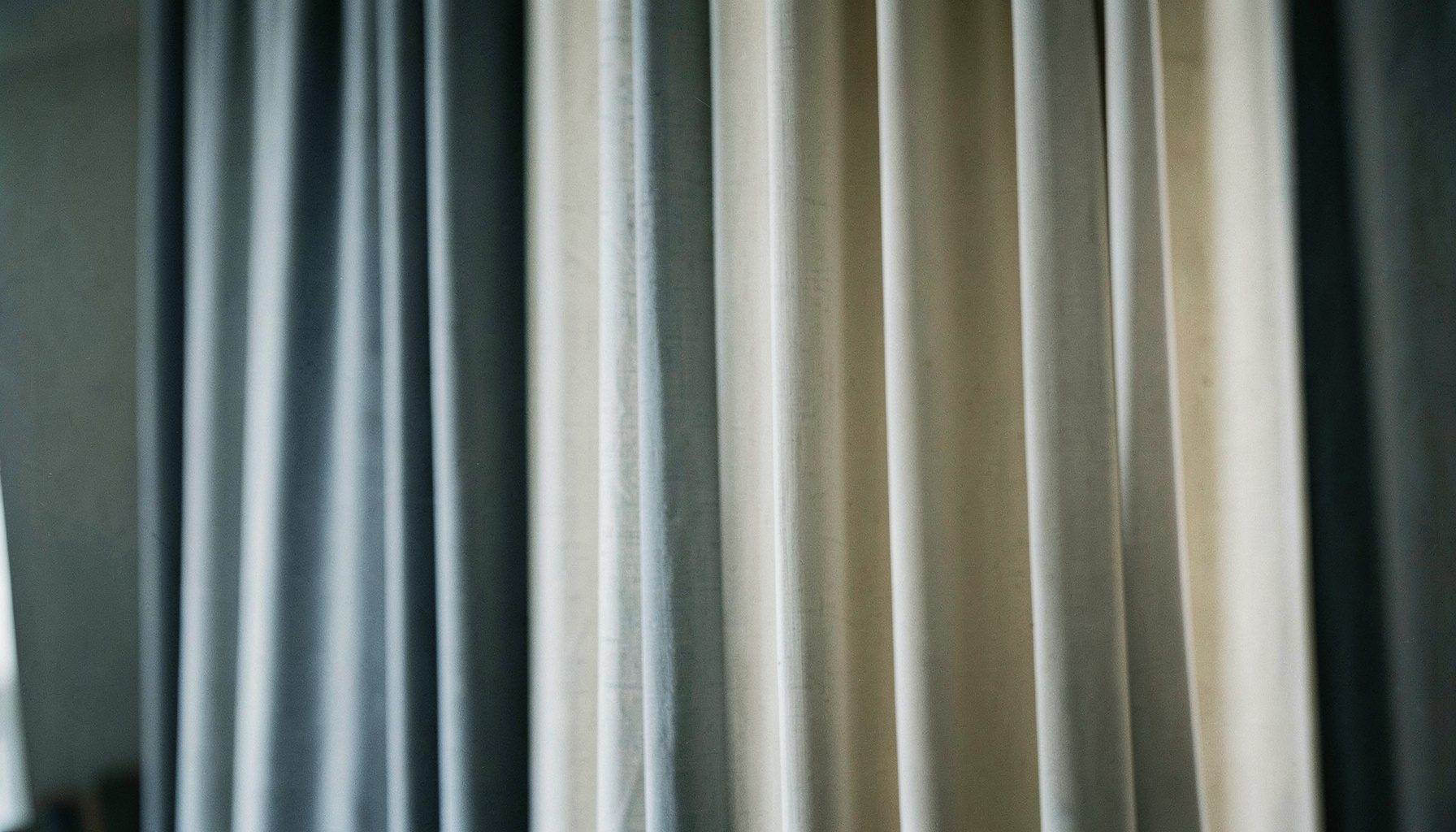
What are tab top curtains and how do they differ?
Tab top curtains are named for the small fabric loops sewn along their top edge. These loops slip directly over a curtain rod, allowing the fabric to hang in soft, evenly spaced folds without separate rings.
Those loops are more than decorative details: they influence how the curtain gathers, how much of the rod remains visible and how easily it moves. They also distinguish tab top curtains from grommet, rod-pocket and back-tab styles.
For Australian homes, the choice also depends on strong sunlight, room size and window design. A heading that looks spot on in a showroom can behave quite differently in a compact Sydney apartment, a Melbourne terrace or a west-facing Perth bedroom.
What makes tab top curtains distinct
Each tab is attached directly to the curtain heading. When the rod passes through the tabs, the fabric gathers along it, creating a casual, relaxed appearance. Because there are no rings, the top edge generally looks simple and slightly textured.
Tab tops are available in soft sheers, woven fabrics and substantial blackout materials. The width and stiffness of the tabs can change the fold pattern, while the rod diameter must allow them to pass over it easily. Exposed wooden or metal rods often suit this informal style particularly well.
How they compare with other curtain headings
The main difference lies in how the curtain attaches to the rod and what the finished heading looks like.
Tab top curtains:
- Use sewn fabric loops that slide directly onto the rod
- Create soft folds without separate rings
- Suit casual, relaxed and cottage-inspired interiors
Other common curtain headings:
- Grommet or eyelet curtains use reinforced metal rings
- Rod-pocket curtains conceal most of the rod inside a sewn channel
- Back-tab curtains attach the rod behind the heading for a neat finish
Tab tops are usually quicker to dress than pleated headings because they do not need to be hooked onto individual carriers. However, they may gather less uniformly than pinch pleats or Dutch pleats, so the fabric quality and careful measurement remain important.
Curtains, drapes and Australian homes
In Australia, “curtains” is the common everyday word, while “drapes” can sound more formal and is often used for decorative or commercial installations. Both can include tab tops; the terminology does not change the way the heading works.
Tab tops can complement the rendered walls and timber windows found in many Melbourne terraces, while ceiling-mounted versions can save visual space in Sydney apartments. They also work well in coastal homes from Brisbane to the Gold Coast, where light, easy-care fabrics suit relaxed interiors. For additional style inspiration, decorative curtain ideas offer useful comparisons.
Fabric, sunlight and light control
West-facing windows in Perth and Brisbane can receive intense afternoon sun, making both heat and fading important considerations. A densely woven fabric provides greater privacy and UV protection, while a sheer tab top can soften daylight without blocking the view.
Blackout curtains can also carry an insulating lining, helping reduce glare and improve room comfort. In cooler areas, this may make a noticeable difference during winter evenings. Lined fabrics generally require more careful cleaning than unlined sheers, so buyers should check the care instructions before ordering.
Colour is equally significant. Warm whites can make a compact room feel brighter, while oatmeal, sand and muted green tones suit many Australian interiors. The best approach is to compare fabric samples in the room at different times of day rather than relying on a screen image alone.
Measuring and installing tab top curtains
Measure the rod’s internal width, the required curtain drop and the distance from the window to the rod. Allow enough fabric for the tabs to gather without creating a flat, stretched panel. Measuring in metres is common, but millimetres can be useful when checking brackets, finials and unusual window dimensions.
The tabs must pass easily over the entire rod and its finials. This matters because a decorative finial that is too wide can prevent the curtains from sliding on properly. Confirm that the bracket spacing will support both the rod and the weight of the fabric.
For arches, recesses or other unusual shapes, follow arched window installation rather than forcing a straight arrangement. Curved tracks or carefully positioned rods may provide a cleaner result than conventional tab tops.
Care, longevity and made-to-measure options
Vacuum curtains regularly and follow the manufacturer’s cleaning guidance, particularly for lined or blackout fabrics. Avoid soaking heavily decorated material unless the care label permits it. Hanging the panels fully open can help release creases, while keeping the rod area ventilated reduces trapped dust.
Made-to-measure curtains can be adjusted to the proportions of a particular room rather than relying on standard dimensions. Width, drop, fabric, lining, heading style and rod finish can all be selected, making tab tops suitable for private rooms as well as hotels, schools, healthcare facilities and Australian resorts.
Create your finished curtain look
Factory Direct Drapes offers custom curtains and rods in a broad range of styles, fabrics and light-control options. Its curtains are handmade in America and sold directly, with fabric samples, measuring guidance, a virtual room designer and installation support available.
Each made-to-measure order is backed by a lifetime workmanship warranty. Choose your fabric, confirm the measurements and order a sample today to begin creating a curtain treatment tailored to your room.