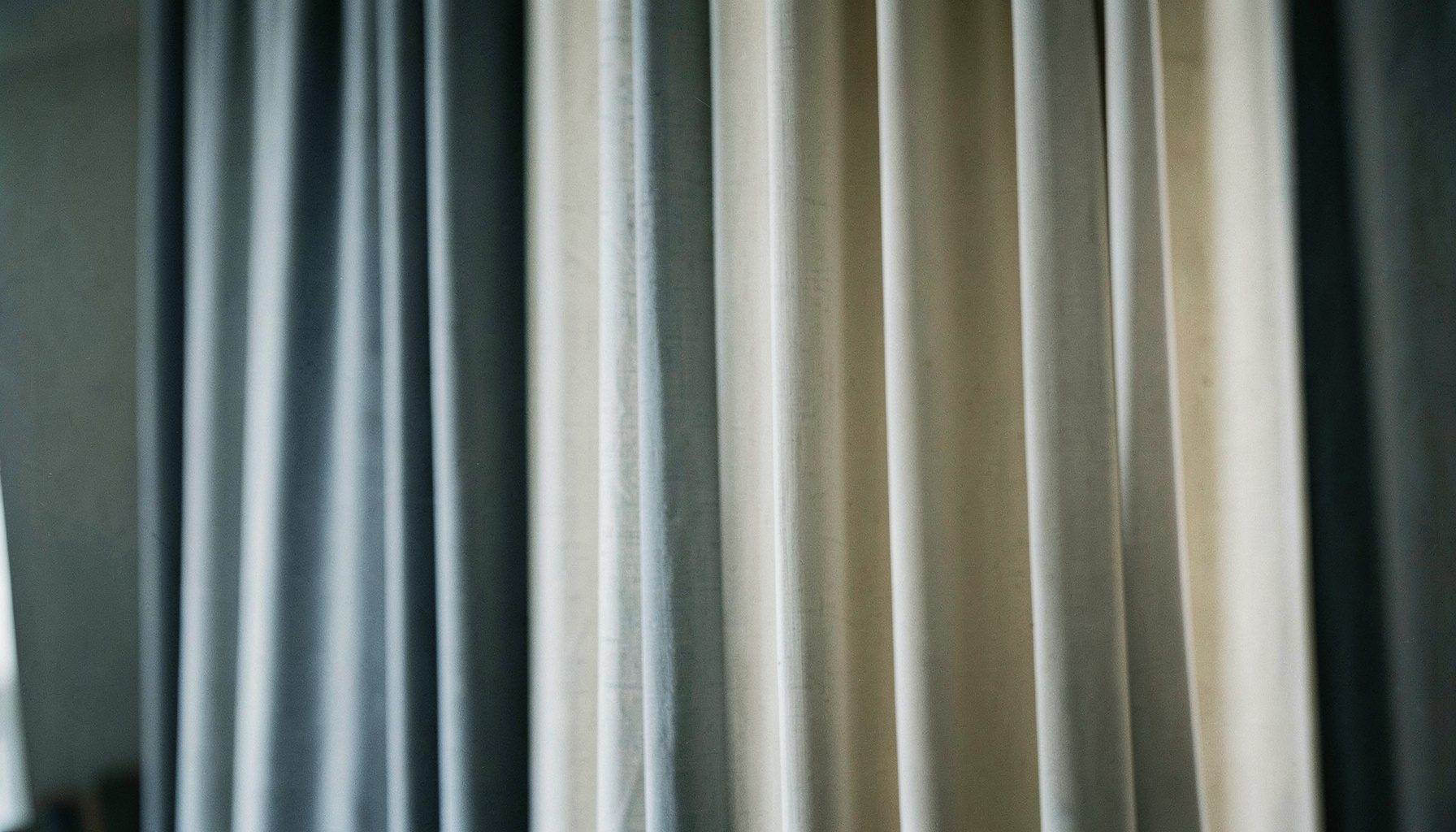
How to Use Drapes to Zone an Open-Plan Living Space
An open-plan living room can feel broad and indistinct when the lounge, dining area and television corner share one uninterrupted floor. Drapes act as soft architecture: they define a room edge, disguise a doorway or frame a view without adding a wall.
This approach suits Australian homes, where kitchens often merge with family rooms and sliding doors open to patios. Apartments and townhouses in Sydney, Melbourne and other growing cities frequently have this layout, so curtains can provide privacy while preserving a spacious feel.
Identify the zones worth defining
Begin by naming the activities that need a clearer boundary, such as dining, relaxation, media or a home study. Then choose the transition point where people naturally move between them. A drape beside the kitchen opening, around the television recess or in front of a seldom-used window can establish a zone without rearranging furniture.
Decide whether the curtain should remain open, sit partly drawn or close completely for privacy. In a busy Australian household, that choice matters around play areas, work nooks and doorways, yet the curtain must never obstruct a walkway, cabinet or appliance.
Measure the openings and plan the hardware
Measure the finished window or sliding-door frame, not just the glass, and note any handles or projecting sills. A pair of panels should overlap slightly at the centre when closed. Position the rod high and extend it beyond the opening on both sides so the fabric stacks neatly and the window appears wider.
Weight changes the hardware requirements. Lined, double-width or blackout curtains need secure brackets, adequate spacing and a rod rated for the load. choosing sturdy curtain rods is a useful guide before deciding on decorative rods or a ceiling-mounted track.
Control sunlight, heat and privacy
Light control should follow the room's orientation. East-facing windows receive sharp morning sun, west-facing rooms take the strongest afternoon heat, and north-facing glass can admit sustained daylight. Sydney and Brisbane homes often need reliable UV and heat management, while Melbourne's changeable weather calls for flexible layering.
Combine a sheer with an opaque drape when a room needs daylight by day and separation at night. Insulated linings can improve comfort around glazed doors; blackout fabric offers the darkest result. For sliding doors, choose a stack that clears the opening fully so the panels do not trap against the track.
Coordinate colour and visual flow
Let the largest fixed item in each zone guide the fabric choice. A neutral sofa can support curtains in a stronger accent, while a patterned chair may call for a plain panel. Borrowing the same restraint from Scandinavian colour ideas helps create a palette that feels connected rather than assembled room by room.
Repeat one colour, pattern or texture across connected areas to make the zoning intentional. Keep the curtain fabric visually substantial enough to read as a boundary, but avoid giving every zone a different print, as that can fragment the floor plan. Sheers soften transitions where the visual separation needs to feel light.
Match panels to the room's proportions
Full-length panels create the cleanest division because the vertical line reaches the floor. Hang the rod close to the ceiling and leave the panels just above the floor or with a deliberate break for cleaning. If the ceiling is low, extending the rod wider and keeping the fabric simple often gives more height than adding a large decorative header.
Curtains following a bay window, corner or curved doorway need a shape that follows the architecture rather than a stack of straight folds. Custom sizing can also keep a dining-room curtain within the ceiling's proportions without taking over the room. Check measurements twice, especially where an older Australian home has uneven walls or replaced doors.
Use a practical zoning checklist
Before ordering, separate layout decisions from fabric decisions so one does not compromise the other.
Opening and placement
- Mark every window, slider and proposed curtain line.
- Check the full opening and walking clearance.
- Allow a slight overlap when panels meet.
- Decide where stacked fabric will sit.
Light, climate and finish
- Record the direction and hours of direct sun.
- Choose sheer, lined or blackout layers.
- Compare fabric samples in morning and evening light.
- Confirm rod, track and bracket dimensions.
Walk through the room with the curtains in their intended positions. Open and close each one, check sightlines from the sofa or dining chairs, and make sure fabric does not catch on handles. Small adjustments now prevent awkward gaps, trapped runners or an expensive remake later.
Turn the plan into a finished room
Australian shoppers can find standard-width, ready-made curtains in major retailers, but unusual openings often suit the made-to-measure end of the market better. Under the Australian Consumer Law, supplied goods must generally be of acceptable quality, fit a disclosed purpose and match their description. For custom orders, ask for written measurements, lead times, alteration terms and details of any workmanship guarantee.
For made-to-measure pieces, Factory Direct Drapes offers fabric samples, measuring guidance, a virtual room designer and a lifetime workmanship warranty. Use those resources to confirm the drop, heading style and hardware before production begins.
Order fabric samples for the first zone, then build it with properly measured, full-length panels.