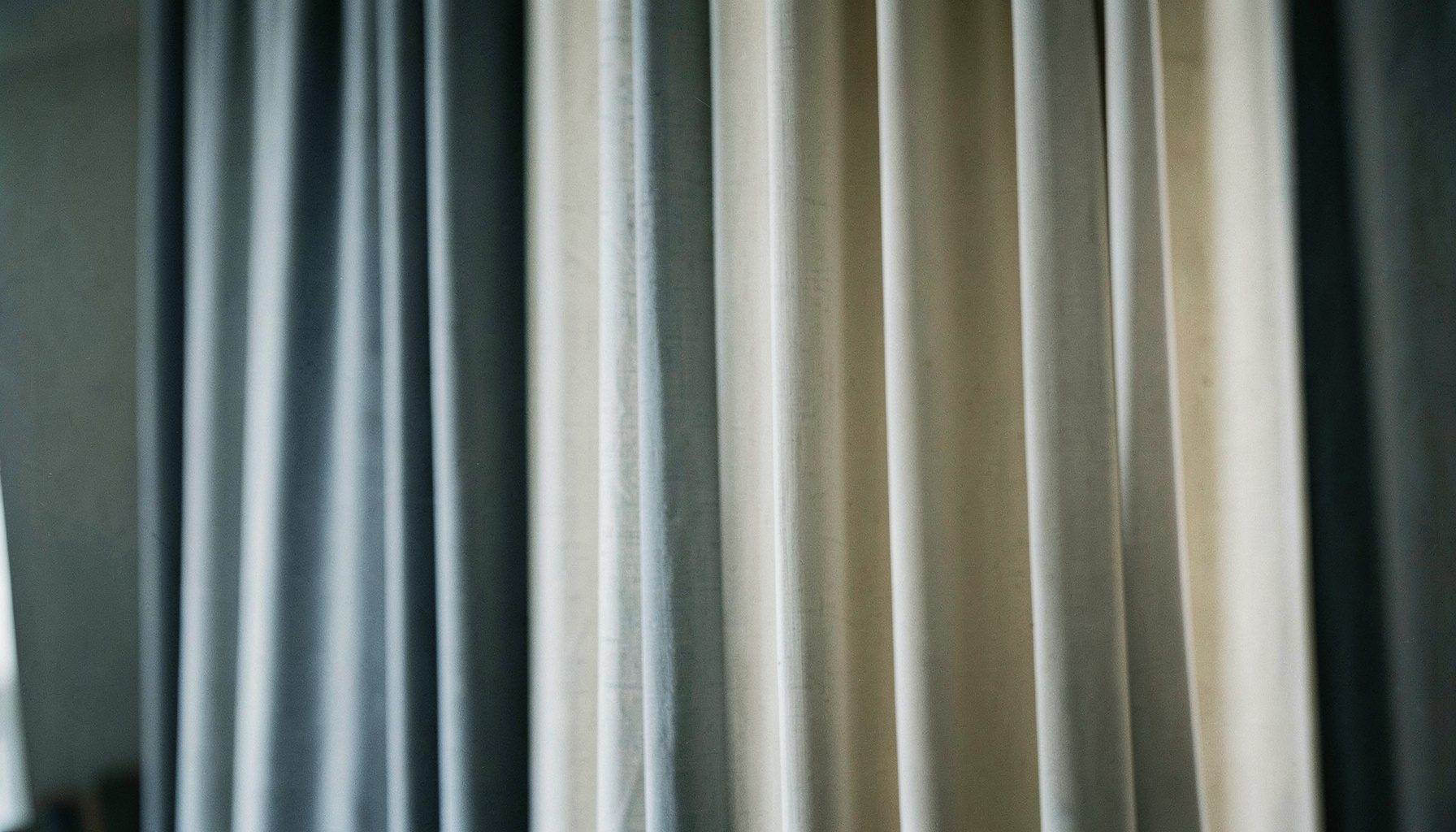
How to Use Curtains to Make a Ceiling Look Higher
Vertical lines can make a room feel taller by guiding the eye upwards. Full-length curtains, high-mounted tracks, and uninterrupted colour blocks create this impression while adding softness, privacy, and light control to the space.
The effect depends more on proportion than expensive fabric. Hang curtains close to the ceiling, carry them almost to the floor, and make the window area appear wider. These simple choices visually stretch the architecture without altering the room itself.
Begin with the ceiling line
Start by deciding where the curtain heading should sit. Mounting a pole or track close to the ceiling creates the strongest illusion of height, while leaving a large gap above the window can make the ceiling feel lower. If there is ornate cornice, position the track discreetly beneath it without hiding important architectural details.
A continuous track extending beyond the window frame also helps. It makes the opening appear wider and encourages the eye to travel upwards and outwards. Avoid bulky fittings, deep valances, or isolated drops of fabric around the window, as these can interrupt the room’s vertical flow.
Give the window a taller frame
Before choosing fabric, consider the overall shape of the window treatment:
- Mount the track or pole as high as safely practical.
- Extend it beyond both sides of the window frame.
- Use a single continuous pole for multiple windows.
- Let the curtains fall close to the floor for a longer profile.
Measure the available drop from the ceiling to the floor, including any radiator, sill, or uneven paving. A slight break at the bottom can create a relaxed appearance, but excessive pooling often adds visual weight. For a cleaner result, specify a drop that finishes just above the floor.
Custom curtain options can be made with tall drops, wide tracks, and coordinated fabric selections. Full-height panels suit both conventional homes and modern apartments because they establish a clear vertical line and visually connect the ceiling with the floor.
Coordinate colour, light, and pattern
Light-coloured curtains reflect daylight into the upper part of the room, making the space feel brighter and generally larger. Matching the curtains closely to the wall colour creates an almost continuous surface, while a contrasting but subtle vertical stripe adds definition without making the ceiling seem lower.
Keep horizontal patterns away from the upper wall, and avoid heavy, dark fabric that visually compresses that area. Sheers can soften a window while preserving daylight, whereas blackout curtains provide more privacy and insulation. In a room with very high ceilings, the curtain fabric can remain restrained so the architecture remains the dominant feature.
Integrate the track and hardware
Slim tracks and understated poles often work better than decorative hardware on tall walls. Match the finish to the window frames, shutters, or nearby furniture rather than making the track the main visual feature. Ceiling-mounted systems also leave the wall beneath the window clear, preserving useful space in compact rooms.
For additional inspiration, browse curtain styling ideas and compare how different drop lengths affect a room. If you rent, a tension-mounted track may offer a high-hanging appearance without permanent fixings. Otherwise, secure the mounting points properly and check for cables, pipes, or ceiling fans before drilling.
Make practical choices for Australian homes
Local conditions should influence both fabric and installation. Australian homes range from compact city apartments to character-filled houses and expansive suburban rooms, so the best curtain proportions depend on the architecture rather than a single standard:
- Sydney apartments often combine limited wall space with tall windows; a slim ceiling-mounted track keeps the floor open.
- Melbourne’s Victorian terraces frequently feature high ceilings and decorative cornices that need careful measurement.
- Brisbane’s Queenslander homes often have broad windows and verandahs exposed to strong sun, making UV-resistant or lined fabric useful.
- Australian custom drapery commonly uses metric measurements, so confirm the drop, track width, and fabric allowance in centimetres.
Choose samples that suit your local light and climate:
- Test lined or blackout fabric for rooms facing strong western sun.
- Select washable finishes for homes with children, pets, or active verandah areas.
- Compare sheer and opaque fabrics under the actual lighting conditions.
- Check that the curtain weight suits the track and ceiling fixings.
Australia’s made-to-measure drapery market includes online factory-direct suppliers, which can provide guidance without the overheads of a traditional showroom. Look for clear measuring advice, installation resources, fabric samples, and a workmanship warranty before placing an order.
Measure carefully and bring the room together
Begin with the largest window because it creates the strongest visual impact. Record its width, the ceiling-to-floor drop, the position of any obstacles, and the desired distance between the fabric and the floor. Repeat these measurements for each window, then view the room from the entrance to decide whether matching drops would create a more unified effect.
Consistency matters. Curtains of equal length establish a strong horizontal line along the floor, while vertical folds prevent that line from feeling heavy. If the ceiling is especially high, curtains with a simple heading and minimal stack will preserve the sense of openness. Decorative rods can still work, provided their proportions remain restrained.
Measure one window, order a set of fabric samples, and use the available room-planning tools to test the proportions. Then specify full-length curtains with a high track position to create a taller, more connected room.