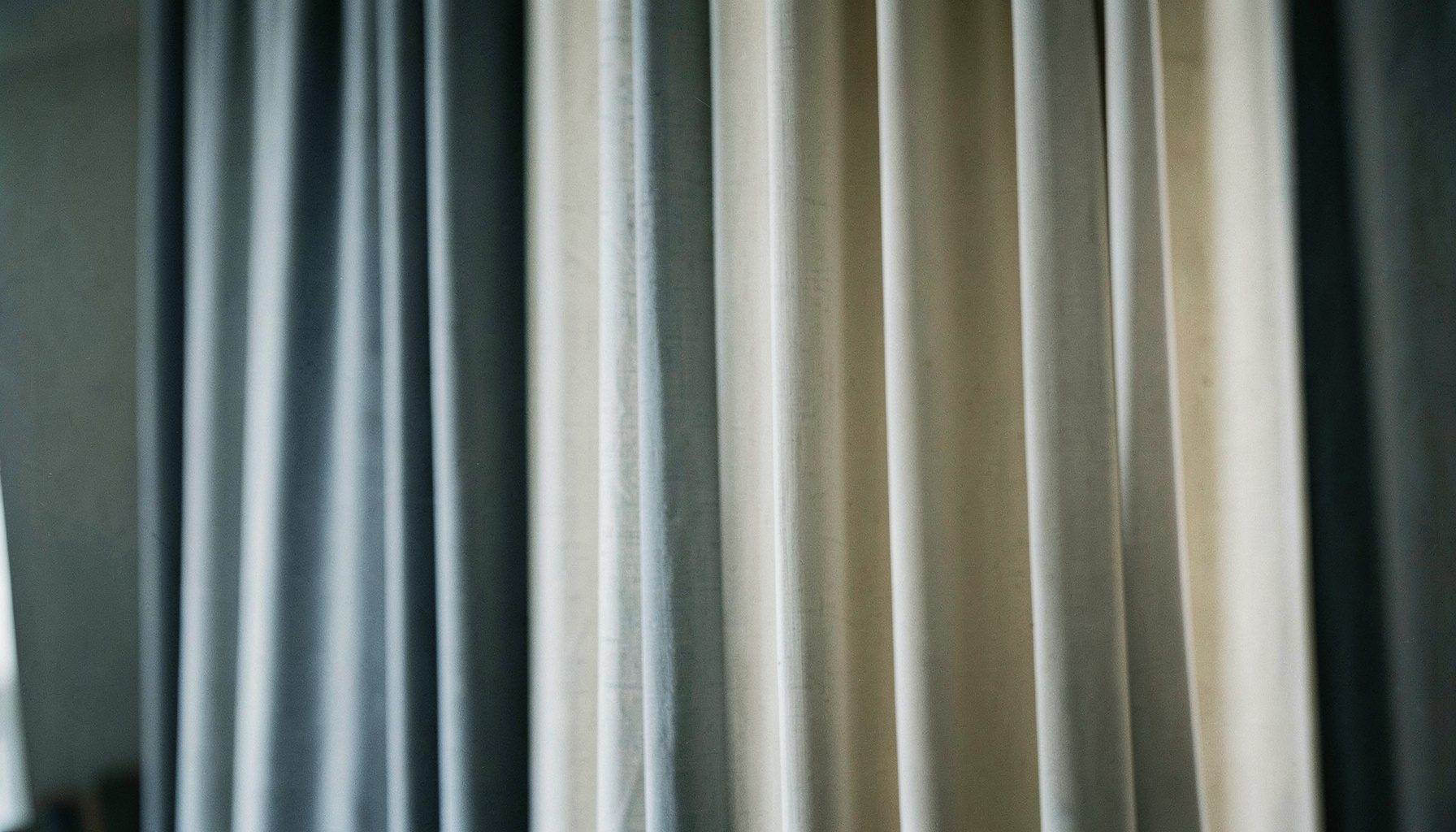
How to style curtains for a mid-century modern interior
Mid-century modern interiors rely on clean geometry, warm timber, generous blank surfaces and a few sculptural accents. Curtains complete the room when they reinforce its proportions and add softness, rather than competing with the architecture or recreating a theme-park version of the 1950s.
Australian homes add another layer: open-plan living areas, wide bifold doors and alfresco openings filled with strong sunlight. The right window treatment should frame the view, control glare, preserve airflow with the air conditioner running and still feel calm beside retro-inspired furniture.
Begin with the room’s architecture
Start by reading the architecture. Floor-to-ceiling curtains make slim windows appear taller, while a generous drop adds elegance to a compact room. In a post-war Australian home, the original living room may have casement windows, timber surrounds or a distinctive brick firewall, so the curtain shape should respond to those proportions.
For an open-plan space, treat each glazing zone as part of one composition. Curtains can visually link the lounge, dining area and bifold doors, while a separate sheer at the kitchen window keeps the room useful. Avoid hanging panels in the middle of a feature wall unless their width and spacing support the existing geometry.
Build a restrained palette
Choose a neutral ground such as chalk, oat, warm grey or sand, then add one deeper tone: olive, rust, dusty teal, chocolate or navy. These shades sit naturally with walnut, black metal and tan leather. Because curtains occupy a large area, a quiet base colour usually looks more modern than several competing patterns.
Use the walls and upholstery to decide whether the curtains should recede or lead. If the sofa already carries a graphic print, plain panels can provide breathing space; if everything is pale, a stronger curtain colour may define the window. Repeat one hue from the rug, artwork or timber elsewhere so the room feels resolved.
Choose a curtain silhouette
Soft pleats and crisp flat panels suit rectilinear mid-century forms, while a shallow wave fold adds movement without looking overly formal. A pinch pleat or triple pinch creates a tailored 1950s reference, but keep the heading and fold spacing consistent. For large windows, ample fullness gives the fabric a full, sculptural shape.
Measure in metres and record the finished drop, not just the frame. Many Australian ceilings are around 2.4 metres, with taller new builds reaching 2.7 metres, so mounting close to the ceiling can create a much better proportion. Leave enough clearance for ceiling fans, vents and hardware, and check whether a track can follow a curved opening.
Plan for Australian light
Treat climate as part of the style. Sydney homes often need glare control and moisture-resistant fabrics, Melbourne rooms benefit from lining that buffers afternoon chill, and Brisbane’s intense sun calls for UV-stable material or a blackout layer. Test a fabric in the room at midday and late afternoon; showroom light rarely matches a west-facing window.
New Australian homes are designed under the National Construction Code 2022, including insulation and energy-efficiency requirements for many climate zones. Curtains can improve comfort at the glazed edge, but they complement rather than replace suitable thermal glazing and insulation. Many occupants leave blinds open for the view during the day and draw curtains when the air conditioner is on.
Select fabrics that work harder
Linen blends bring texture and drape, cotton feels crisp and cotton-polyester blends are easier to maintain in busy family spaces. A lined panel can provide privacy and insulation; an unlined sheer can soften a view while preserving brightness. For coastal exposure, washable, colourfast fabric and corrosion-resistant track components are sensible choices.
Request swatches, then compare them on the actual window and under the room’s artificial lighting. For a made-to-measure scheme, fabric samples and measurement support from custom curtain options can reduce the risk of a mismatch between texture, colour and drop. Check care labels carefully, especially for UV exposure and frequent washing.
Keep hardware graphic and light
Mid-century hardware should look decisive but restrained. Slim brass or bronze rods warm up walnut and earthy fabrics, while matte black suits teal, charcoal and cream. Decorative finials can work, provided their shape is simple and the metal finish repeats elsewhere in the room. For sliding doors, a ceiling track keeps the glazing unobstructed.
The local market offers ready-made panels from large homeware retailers and made-to-order products from specialist drapery suppliers, so compare both before committing. For custom work, clear measurements, care details and workmanship terms matter; Factory Direct Drapes backs its construction with a lifetime workmanship warranty.
Layer without losing the mid-century lines
Texture is often more convincing than overt pattern. Combine a matte curtain, a translucent voile and a tactile rug to create depth while preserving simple shapes. If you want a period detail, choose one geometric or botanical pattern and keep its scale controlled; repeated motifs should guide the eye, not cover the room.
Finally, view the scheme from the doorway with the furniture in place. Check that panels do not crowd the sofa, collide with a cabinet or disappear behind the air conditioner. The finished curtains should frame the architecture, soften the acoustics and support daily use, while the furniture remains the room’s main mid-century story.
Measure each opening, collect swatches and decide whether the window needs privacy, insulation or both before ordering. Explore the made-to-measure range at Factory Direct Drapes, use the measuring guidance and select a finish that complements your timber, metal and existing palette. Well-fitted panels will make the mid-century lines feel calmer, taller and more intentional.