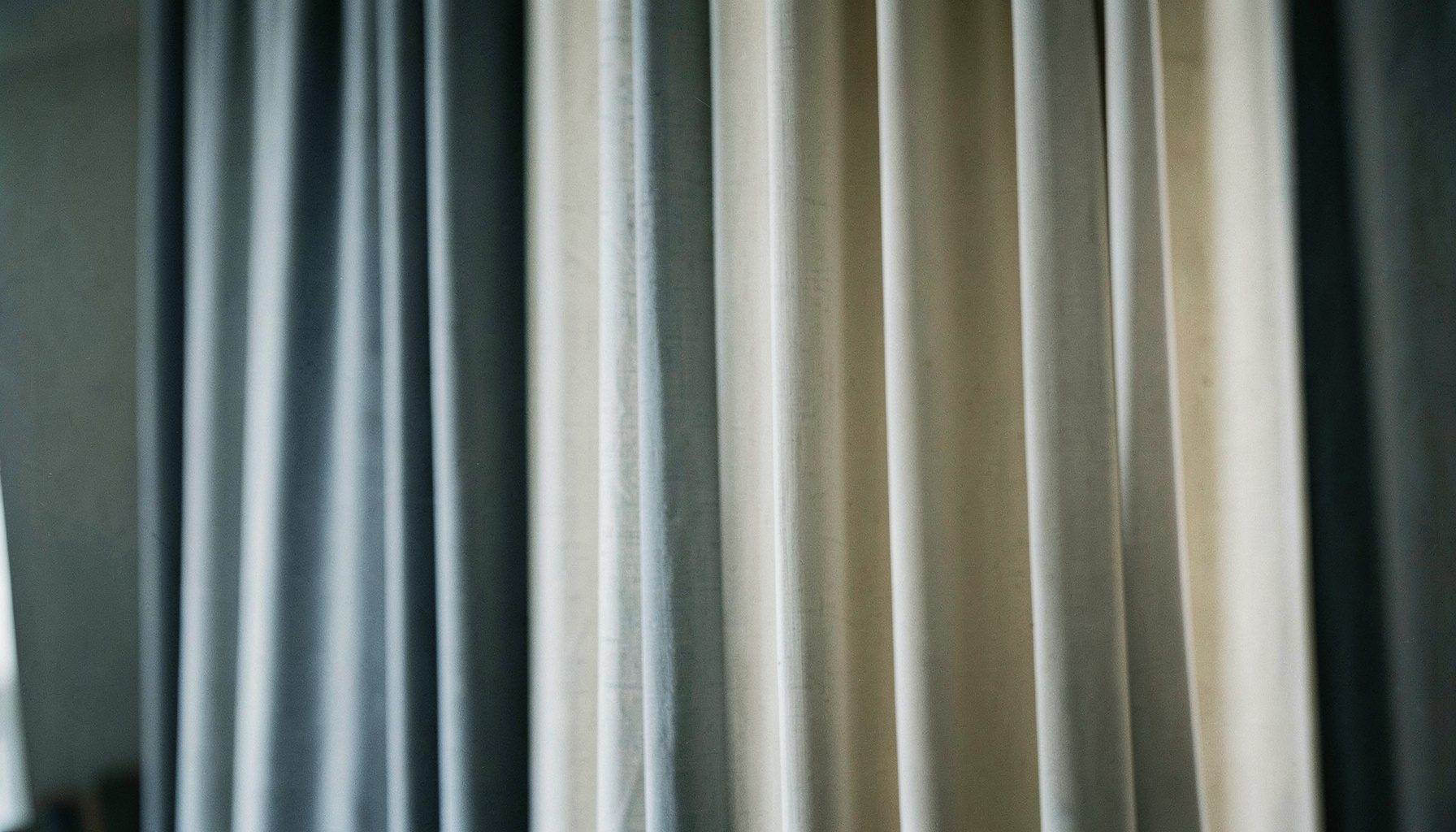
Best Curtain Fabrics for Humid Bathrooms and Kitchens
Humidity, cooking steam and airborne grease make curtains in bathrooms and kitchens unusually demanding. Fabrics that absorb moisture can crease, sag or develop mildew, while loose weaves may not provide enough light control for privacy. The best choice therefore depends on washability, colourfastness, airflow and how much daily care the household can manage.
Australian conditions sharpen those priorities. Brisbane’s subtropical humidity and warm, wet Sydney summers call for fast-drying textiles, while Melbourne’s sudden temperature swings make adaptable window treatments useful. Strong sunlight, salt-laden coastal air and year-round indoor heating also affect colour, fibre stability and condensation, so a fabric suited to a dry climate can disappoint elsewhere.
Why Humidity Changes the Choice
Polyester and acrylic are usually the most reliable performance fibres in damp spaces. Their low moisture absorption helps them retain their shape and dry quickly after cleaning, while modern weaves can provide privacy without requiring a heavy blackout lining. These qualities make them less prone to the musty smell and mildew marks often associated with untreated fabric.
Many Australian homeowners are ordering made-to-measure curtains online rather than choosing from limited rolls, making fibre content, lining and care instructions especially important. Custom curtain options provide a useful starting point for comparing washable fabrics, room-specific finishes and measuring guidance before purchase.
Bathrooms Need Fast-Drying Fabrics
A tightly woven polyester or acrylic panel resists splashes and dries quickly after cleaning. For privacy without complete darkness, a light-filtering weave or sheer voile can be paired with a moisture-resistant lower panel. For street-facing windows, a washable blackout curtain offers greater privacy, provided it is not pressed against a persistently damp wall.
Hardware and proportions matter as much as fibre. Shorter panels clear floors and splash zones, while top-down or bottom-up tracks improve ventilation and light control. When a bathroom also serves as a guest room, clever storage can preserve space; this multifunctional pine furniture guide illustrates how compact fittings can leave the window area uncluttered.
Kitchens Add Grease and Cooking Steam
Cooking vapour carries fine grease toward windows, fabrics and nearby furnishings. Polyester with a stain-resistant finish is easier to wipe or launder than untreated cotton, while a tightly woven acrylic can offer good colour stability. Curtains positioned close to cooking areas should have removable, washable hooks and a fabric that tolerates frequent cleaning.
Australian open-plan kitchens often place curtains beside busy cooking zones and large windows, so washability and UV resistance can matter simultaneously. A light, colourfast lining or separate roller blind can reduce glare and fading without restricting airflow around the hanging curtain.
Natural Fibres Versus Performance Textiles
Cotton and linen can look refined, but both absorb moisture. Linen is breathable and durable in normal conditions, yet bathroom humidity and regular splashes may leave persistent creases or encourage mildew if the fabric remains damp. Cotton can be serviceable in a kitchen, although cooking grease is difficult to remove unless the textile has a protective finish.
For unusual window shapes, high ceilings or split levels, made-to-measure construction helps control fullness, stack and drop. The benefits of handmade custom drapes explain how tailored construction can improve fit while allowing washable performance fabrics to be used in demanding rooms.
A Practical Selection Checklist
Before ordering, take measurements in millimetres and record the width, drop and position of every obstruction. Australian homes often use metric units, but consistent measurements prevent errors when converting finished curtain dimensions into cut sizes.
- Choose 100% polyester or acrylic for bathrooms where moisture, splashes and frequent cleaning are expected.
- Select a tightly woven, stain-resistant polyester for kitchens exposed to cooking steam and airborne grease.
- Use washable blackout or light-filtering layers only when their weight, lining and breathability suit the room.
- Check that hooks, tracks and decorative hardware can be removed and cleaned along with the curtain fabric.
Fabric samples should be viewed in the room at different times of day. Hold them near the window to assess colour, translucency and the severity of heat or condensation, then review the care instructions before making a final specification.
The quickest way to settle the choice is to compare swatches in the room itself, check each fabric’s cleaning requirements and review the measurements before production. Factory Direct Drapes offers fabric samples, measuring resources, a virtual room designer and customer support, helping you move from selection to confidently specified curtains backed by a lifetime workmanship warranty.