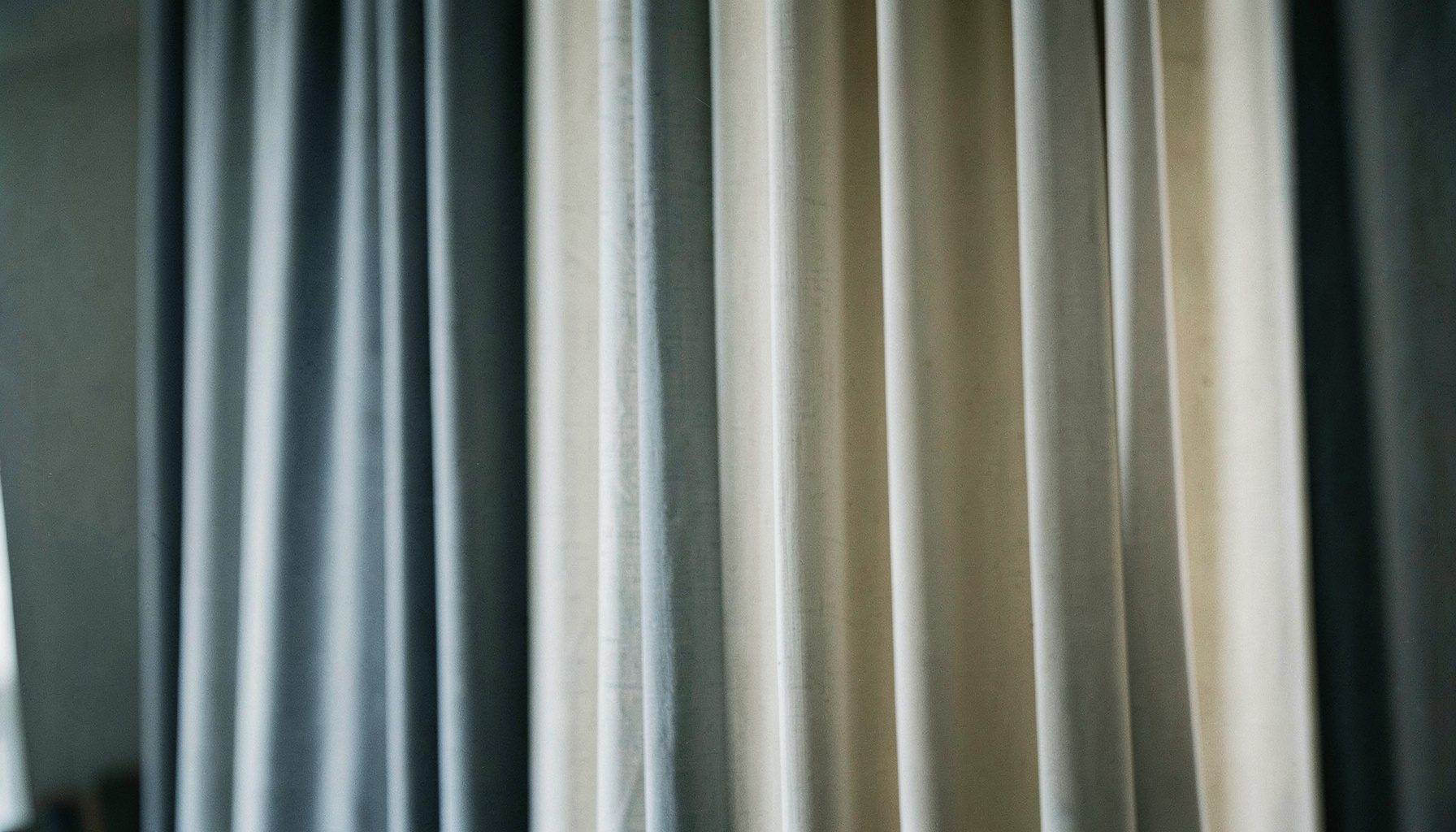
Practical ways to stop curtains fading in strong sun
Understanding how to prevent fading of curtains from sun exposure begins with the window itself. Ultraviolet radiation breaks down dyes, while heat and strong visible light can speed the process. The outcome depends on the fabric, dye, colour, window orientation and how often the curtain is exposed.
Light does not reach every room equally. Sydney and Brisbane homes often experience intense midday and afternoon sun; a west-facing lounge in Melbourne can receive similarly harsh glare. Curtains may look rich for years, yet one faded panel can make an entire room feel worn.
A practical plan combines a suitable textile, useful layers and simple routines. It also accounts for Australian conditions: large glazed openings, sliding doors, common use of blackout linings and strong seasonal UV in a southern-hemisphere climate.
Start with fade-resistant fabrics
Begin with a fabric rated for lightfastness and UV exposure rather than colour alone. Solution-dyed polyester or acrylic tends to hold colour well, while many linens, cottons and viscose fabrics shift sooner. A darker cloth may show fading less visibly than a pale one, but that is not a substitute for testing.
Ask for swatches and view them in the room at different times. A drape facing an east window sees sharp morning light; a west-facing panel copes with long afternoon exposure. Bright fittings can add to the load in rooms with chandeliers; this lighting review is a useful reminder to assess concentrated light sources as well as daylight.
Layer curtains to block damaging light
Add a lining when fading and heat are priorities. The factory direct curtains range includes blackout and insulated options suited to Australian homes, where sliding doors and broad panes are common. A dense lining can reduce glare, solar heat and direct exposure while preserving the decorative face fabric.
However, lining cannot protect fabric stored permanently in a sunbeam. Check how much light enters around the rod, seams and hem, and combine a sheer with a blackout layer if full daytime darkness is needed. Light-coloured linings may eventually yellow, so inspect them periodically.
Manage exposure through the day
Manage daily exposure instead of relying on the fabric alone. Close drapes or blinds during the strongest hours, particularly for west-facing rooms in Sydney and Brisbane, then reopen them when direct light eases. In northern Australia, this usually means late morning and early afternoon; the exact timing depends on orientation and season.
Rotation is another low-cost habit. Swap left and right panels every few weeks, or exchange a frequently exposed pair with panels from a less sunny room. Vacuum gently, avoid cleaning in strong sunlight and follow the care label; harsh detergent and high heat can weaken fibres or fix an existing stain.
Install for complete window coverage
Correct sizing makes the protective layer more effective. Follow the curtain rod measurements for width, drop and projection, then choose a rod wide enough to cover the frame when the curtains are closed. Full-height panels reduce stray light and suit the Australian preference for floor-sweeping drapes beside large windows.
Leave curtains clear of hot glass and heating vents, because accumulated heat can accelerate fibre damage. External awnings, a well-fitted blind or UV-control window film can help where curtains cannot cover the entire opening. Check product evidence rather than assuming a dark colour provides full UV protection.
Maintain a long-term protection plan
Track fading from the start. Photograph each panel in the same light, note its position and mark any colour change on the care label. Clean only as directed, spot-test an inconspicuous area and replace damaged hooks before they create uneven pressure or abrasion along the heading tape.
Make claims easy to verify. Under the Australian Consumer Law, statements such as “fade resistant”, “UV blocking” or “lightfast” should be supported and clearly described. Request test information, fabric samples and written workmanship guarantees when buying, then retain the order details for future care or warranty claims.
Start with one problem window: order swatches, compare a lined and unlined option, and measure before ordering. The Factory Direct Drapes collection, measuring guidance and lifetime workmanship warranty can help you build a room-by-room plan that keeps curtains attractive while reducing sun damage.