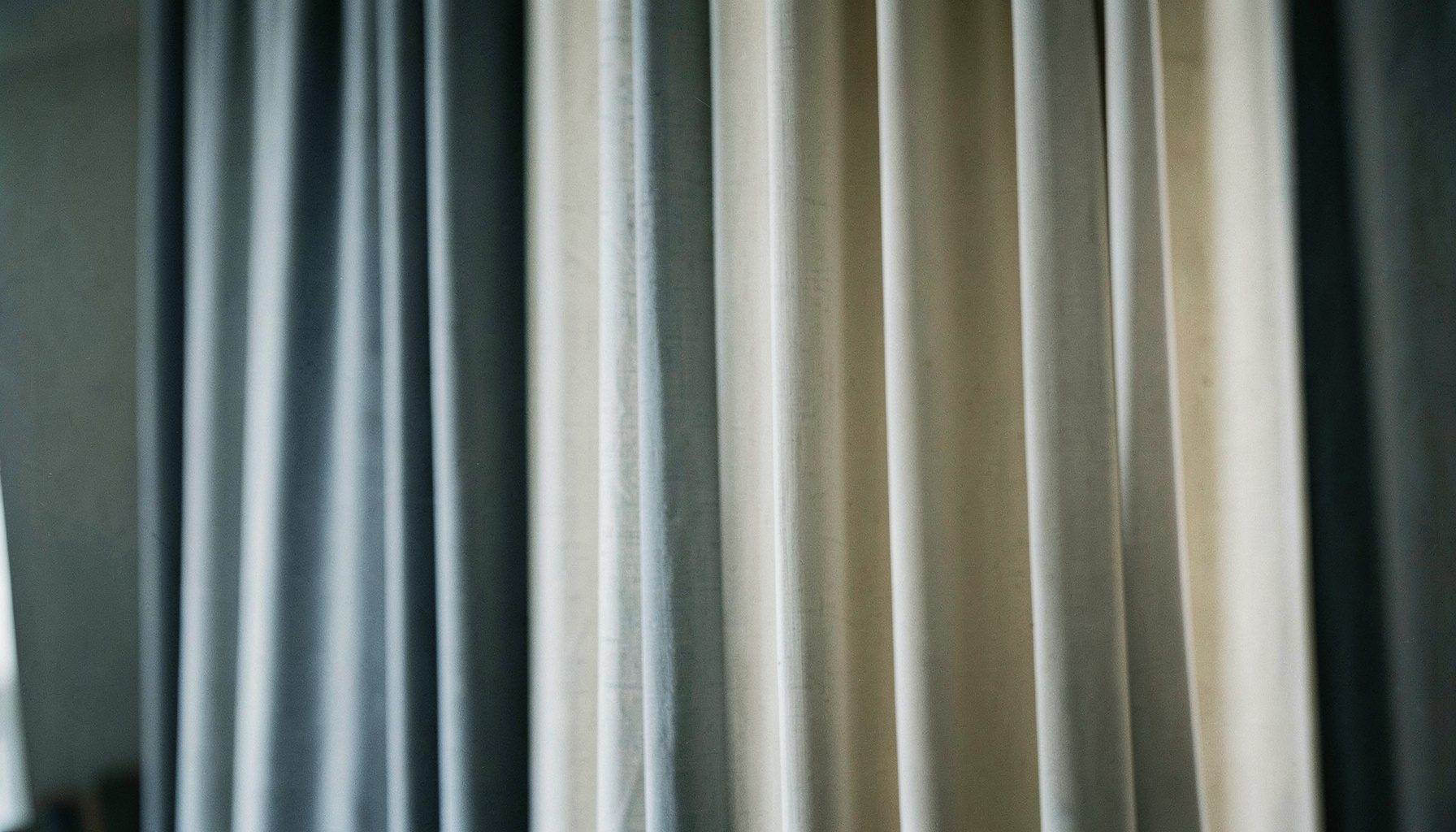
How to choose curtains for a minimalist aesthetic
Minimalist interiors are not simply empty rooms. They rely on proportion, restraint and a few well-chosen textures to create calm. Curtains matter because they frame the architecture, soften daylight and make a practical space feel deliberate rather than unfinished.
The right set for a minimalist home balances clean lines with everyday needs: filtered light, privacy, insulation and easy care. Start with the room rather than a swatch, then narrow the fabric, heading, length and hardware to suit how you actually live.
Those choices vary with Australian conditions. Sydney’s hard summer sun can expose weak colour choices, while Melbourne’s changeable skies reward adaptable layers. Australian homes also favour open-plan living, so curtains often need to work beside a sofa, desk or bed instead of standing alone like a display feature.
Begin with the room’s visual language
Begin with the floor, walls and furniture. If your palette is warm white, sand, pale grey and timber, repeat one or two of those tones in the curtains rather than adding a competing accent. For a cooler room with concrete, stone or charcoal finishes, an off-white or soft putty panel can keep the scheme light.
Texture gives minimalism depth without visual clutter. Look for quiet weaves, linen-look surfaces or matte finishes, then keep the top treatment consistent. Skip busy patterns, unnecessary trims and several competing accent colours; a single textural curtain can be more effective than perfectly matching everything.
Aussies may call a resolved scheme “spot on”, but it still has to handle sun, laundry and children. That is where a restrained curtain can be both practical and polished.
Choose a clean curtain profile
Flat-front panels create the crispest vertical line, while a simple gathered heading adds softness without fussy detail. Match the heading to the decorative curtain rod and check how the fabric stacks when closed. Irregular folds or a badly fitting pocket can make an otherwise simple room look untidy.
Keep the rod itself slim and visually quiet. Matte black works against pale walls, while brushed brass or warm metal complements timber and earthy fabrics. Avoid combining several metallic finishes in one room unless the contrast is intentional and limited to small details.
Match fabric to light and privacy
Decide whether the window needs soft daylight, strong daytime privacy or near-total darkness. Light-filtering fabrics in white, oatmeal or stone are useful where you want the window to glow. Blackout curtains suit bedrooms and media rooms, whereas sheer panels soften a view rather than hiding it.
Insulated or blackout options can also improve comfort in hot rooms and reduce the need for separate layers. For coastal homes from Byron Bay to the Gold Coast, salt-laden air and humidity can affect how some fabrics behave, so confirm care instructions and allow curtains to hang fully before judging their drape.
Colour still matters in bright rooms. A warm white curtain under strong sun can look stark; a creamy or greige fabric will soften the same window. Ask for fabric samples and view them in the room at different times of day rather than relying on a photograph.
Measure before choosing the length
Measure the window, the pole or track position and the floor at several points. Use a metric tape, note any slopes or skirting, and decide whether the panels should finish just above the floor or float around 10 millimetres above it. Long, even drops reinforce the clean vertical lines that minimalist rooms depend on.
Width affects fullness as much as length. A common starting point is one-and-a-half to twice the track width, but a recess, sliding door or furniture underneath may require a different arrangement. For rooms with a bed or sofa, the advice on curtains around furniture can help you set a practical drop.
Balance the hardware and furniture
Curtains should support the furniture, not compete with it. A pale panel behind a dark timber bed can visually anchor the bed, while curtains that stop in front of an armchair may interrupt the room’s flow. Leave enough clearance for drawers, doors and daily movement.
Coordinate rod width with the window or wall rather than choosing the longest available option. A valance is useful for concealing a track or adjusting the apparent height of a tall window, but it is unnecessary if the heading already looks balanced. Less hardware, consistently applied, usually reads as more refined.
Order samples and create your scheme
Factory Direct Drapes lets you compare fabrics, request samples and customise curtains, valances and decorative rods through its direct-to-customer model. Measuring guidance and a virtual room designer help you plan the result, while the range includes light-filtering, insulated and blackout options.
The same range supports commercial drapery for hotels, schools, healthcare facilities and resorts. Pieces are handmade in America and backed by a lifetime workmanship warranty. For Australian shoppers, compare the final AUD total, GST treatment, delivery cost and made-to-order lead time, then confirm dispatch and support arrangements for your postcode.
Order swatches for your shortlist, view them beside the floor and furniture, and customise the width, drop, heading and rod. Once the fabric works in the room, complete your order and enjoy a calmer, more practical space.