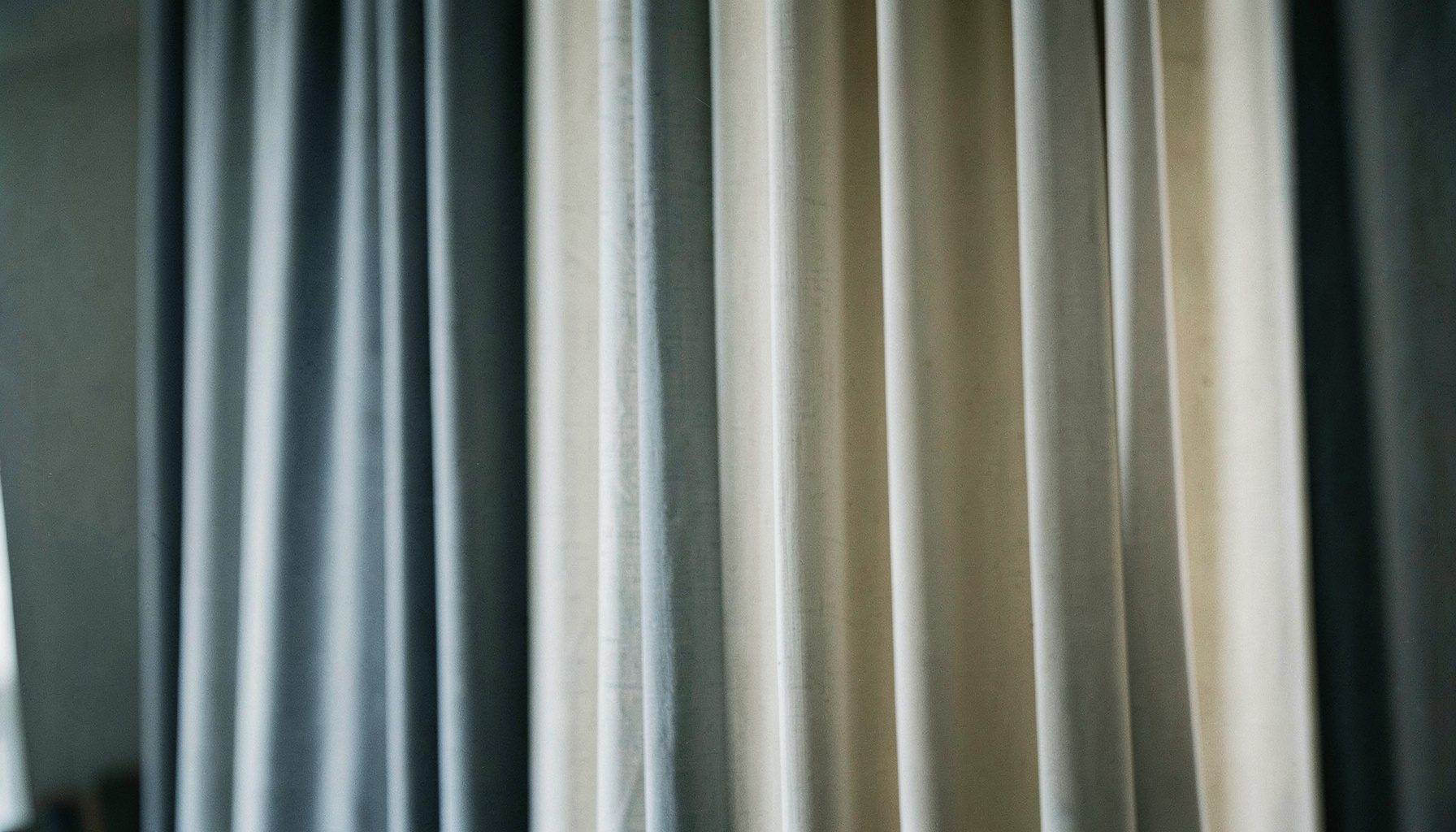
How to choose curtains for a home theatre
Choosing curtains for a home theater room means balancing two goals: preventing stray light from reaching the screen and creating a calm, finished environment. Well-chosen drapery can also soften echoes, making curtains a practical part of the room’s performance design rather than a decorative afterthought.
Australian homes often convert a rear sitting room, study or double garage into a media space. These areas can have large windows or a glass door, while Sydney and Perth properties frequently feature west-facing glazing that attracts intense afternoon sunlight. Long summer evenings also make a reliable blackout strategy essential.
A projector benefits from precise control of ambient light because even a narrow bright edge can wash out dark scenes. A television is more forgiving, but curtains still reduce reflections and visual clutter, giving colours greater contrast and helping the screen become the room’s focal point.
Before shopping, note the screen size, projector position, window direction and how the room is used. Measure each opening, compare fabric samples under different lighting conditions, and allow sufficient time for custom drapery to be made and fitted.
Start with light and screen placement
Walk through the room at the time of day you normally watch films and identify every source of daylight. Pay attention to light leaking around the edges of a window, reflecting from walls or entering through a doorway. Curtains positioned outside the projector’s beam will usually create cleaner image quality than those hung directly behind the screen.
Decide whether the curtains must produce complete darkness for daytime viewing or simply reduce glare in the evening. A fully blacked-out installation may suit regular daytime use, while a substantial lined curtain can provide a softer result without making the room feel sealed. A valance can conceal the curtain track and reduce overhead light spill.
Build a layered blackout strategy
Blackout curtains work best when the fabric blocks direct light and the installation limits gaps. Side panels that meet without a visible opening can reduce light around the window, while a top valance or pelmet covers the space above the main panels. Wide panels also overlap more effectively when closed, especially on wide windows.
Australian UV levels and strong summer light justify careful fabric selection. A dense weave, blackout lining or insulated construction can improve comfort and light control, while a stable backing helps curtains hang neatly. For west-facing rooms, test the chosen material during the brightest part of the afternoon rather than relying solely on its colour.
Choose fabric for performance and atmosphere
Heavy fabrics can reduce sound reflections and stop curtains from moving violently when air-conditioning starts. Velvet, chenille and substantial textured fabrics create a cinematic appearance, but their performance depends on the backing and construction as much as the surface material. Lined panels generally hang more predictably and offer better light control than unlined versions.
Explore made-to-measure drapery from Factory Direct Drapes for custom curtains, valances, blackout and insulated options, fabric samples and measuring resources. Its products are handmade in America, so Australian customers should confirm production time, delivery arrangements and any applicable charges with customer support before ordering.
Measure the window and plan the hardware
Use Australian metric measurements and record the width at both the top and bottom of the opening. Check the ceiling, floor and any obstructions such as radiators, ventilation grilles or a projector mount. Allow curtains to project beyond the window frame, and plan the finished drop carefully if the floor, ceiling or sightline is uneven.
The curtain and rod choices should suit both the window and the room. A ceiling-mounted track can make a window appear larger, while a wall-mounted rod works well where ceiling space is limited. When comparing curtain and rod choices, consider the projection needed to stack panels neatly and whether the hardware finishes complement the room’s colour scheme.
Improve acoustics without blocking the room
Curtains can soften sharp echoes because their folds and fabric surfaces absorb some sound energy. They are most useful in a room with hard floors, bare walls and large windows, although they cannot replace dedicated acoustic panels or sound-isolated construction. The aim is usually to improve clarity and reduce reverberation rather than create complete soundproofing.
Coastal and subtropical areas require particular attention to humidity and airflow. In Brisbane and other humid climates, breathable linings and good ventilation help prevent trapped moisture and musty odours. Keep curtains clear of air-conditioning outlets and ensure the room retains the airflow needed for comfort, especially when doors and windows are closed during a film.
Match colour, style and controls
Choose a colour that supports the screen rather than competing with it. Charcoal, warm grey, deep brown and muted navy suit many media rooms, while lighter curtains can make a smaller space feel more open. Patterned fabric may work well in a dedicated theatre, but a plain dark colour usually keeps attention on projected images.
Decide whether manual curtains provide sufficient convenience or whether a motorised track is worthwhile. Remote operation is helpful for high windows, large panels and rooms with multiple seating positions. Motorised hardware may require a suitable power outlet and correct electrical connection, so use a qualified electrician where needed and follow the manufacturer’s instructions.
Order samples, install well and finish the room
Request fabric samples before confirming the final selection, then view them beside the intended wall and flooring. Check the colour under artificial light as well as daylight, and confirm the heading style, hem finish and stack direction. Factory Direct Drapes also provides measuring guidance, installation resources, a virtual room designer and a lifetime workmanship warranty.
Secure tracks or rods into suitable structural fixing points rather than relying on unsupported plasterboard. Expansion plugs, screws and suitable adhesives can be sourced from a local hardware store such as Bunnings, but the fixing method must suit the wall type and curtain weight. Install the hardware before the final panels arrive, then check that every fold hangs evenly.
Measure the windows, order your fabric samples and begin creating a home theatre that delivers deeper contrast, softer acoustics and a polished screen-focused atmosphere.